


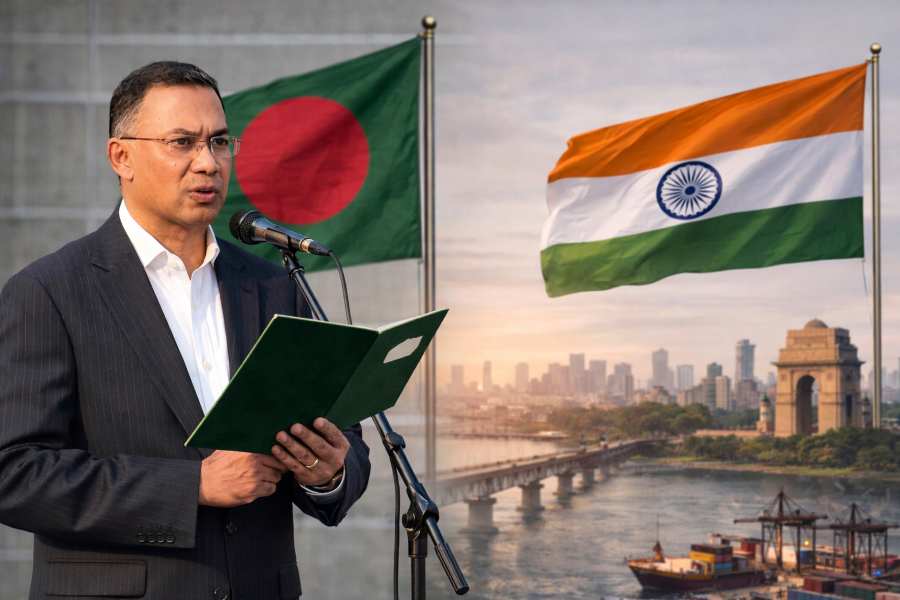
Jamaat’s poor performance, Tarique Rahman’s rise, and the diplomatic reset that could redefine South Asian geopolitics
BANGLADESH’S ELECTORAL VERDICT has done more than alter the balance of power in Dhaka. It has recalibrated the strategic grammar of South Asia. The decisive mandate in favour of the Bangladesh Nationalist Party marks not merely a political transition but the beginning of a subtle diplomatic reordering.
For over a decade, India Bangladesh relations operated within an architecture of strategic comfort built around leadership chemistry and security convergence. That era now gives way to a more complex phase, less emotive, more transactional, and anchored in assertions of sovereignty.
The underperformance of hardline Islamist formations has reduced ideological turbulence, yet the new government inherits a charged domestic mood and a region in flux. How Tarique Rahman balances internal consolidation with external recalibration will determine whether this moment evolves into friction, equilibrium, or a mature strategic reset between two indispensable neighbours.
Electoral Mandate and the Jamaat Factor
A notable subplot of this election has been the underperformance and visible fragmentation of Bangladesh Jamaat-e-Islami and allied hardline platforms that were widely expected to ride the post Hasina churn. Their tumble has led some of these groups to question the authenticity of the polls.
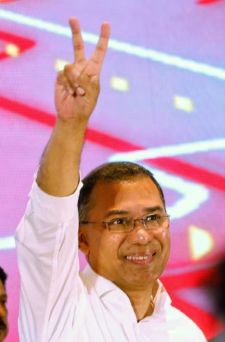
Tarique Rahman celebrating election victory
For India, this outcome is quietly reassuring. In the past year, such elements amplified anti India rhetoric in public spaces and pressed the interim establishment toward positions that complicated regional optics. Their electoral setback reduces the leverage of maximalist narratives and creates room for a pragmatic reset in Dhaka’s external posture.
Old memories inform present caution. The 2004 Chittagong arms haul, in which ten truckloads of weapons were allegedly destined for insurgent networks, remains a reminder of how extremist ecosystems can exploit political space in Dhaka.
A stronger mandate for such forces would have signalled the return of overt ideological hostility toward New Delhi and revived dormant security anxieties along India’s eastern flank.
The electoral setback for Jamaat opens diplomatic space for calibrated engagement with the Bangladesh Nationalist Party under Tarique Rahman. His articulation of a Bangladesh First approach suggests pragmatism without perceived subservience. Transit, connectivity, and trade can now be framed as economic decisions serving Bangladeshi interests rather than political concessions to India.
Stability, Sovereignty and Public Mood in Bangladesh
The interregnum after Sheikh Hasina saw interim stewardship struggling to reconcile moral authority with administrative grip. Expectations of technocratic reset ran into politicised institutions, assertive youth platforms, and a restless street.
The economy slowed under strike cycles and investor hesitation. Law and order credibility wavered. Foreign policy signalling appeared inconsistent at moments of domestic pressure. The new administration inherits the urgent tasks of restoring institutional stability, reviving economic confidence, and insulating statecraft from street sentiment.
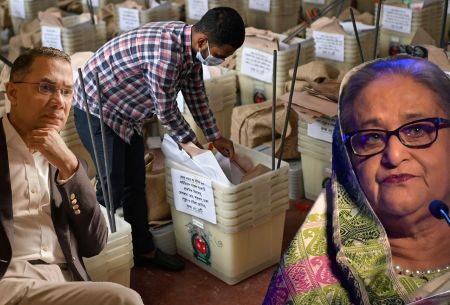
Election process reshapes Bangladesh political landscape
A striking feature of the election was the visible turnout of women voters and meaningful support extended by minority communities including Hindus and Christians toward the BNP in several constituencies. This support carries expectations. Protection of minorities, especially Hindus who have faced sporadic intimidation during political flux, will be an early test of the new government’s credibility.
Sections of Bangladeshi society increasingly believe India was excessively indulgent toward the previous regime, overlooking democratic concerns in favour of strategic convenience. This sentiment, amplified through social media and campus discourse, does not automatically translate into policy but creates rhetorical space that fringe elements can exploit.
The challenge for the new government is to manage public opinion without suppressing democratic expression and to demonstrate sovereignty without sacrificing cooperation.
Reframing India Bangladesh Relations
The Hasina years institutionalised security coordination, transit access, intelligence sharing, and infrastructure connectivity between India and Bangladesh. A BNP government is unlikely to dismantle this architecture because it is embedded in mutual interest. What will change is the political vocabulary.
India Bangladesh relations enter new phase
The language of special relationship may yield to sovereign parity. Reviews of select transit or security arrangements may occur as signals of domestic legitimacy rather than policy rupture. Optics may cool while substance endures.
For New Delhi, nuance rather than reflex is required. Early progress on trade facilitation, customs streamlining, and expansion of border haats would signal goodwill. Movement on water sharing arrangements and collaborative river management would address issues that resonate deeply within Bangladesh.
Connectivity projects linking India’s Northeast through Bangladeshi territory remain vital for economic integration. Energy trade and grid cooperation can deepen interdependence while supporting industrial expansion in Bangladesh. Recognising Tarique Rahman as a legitimate democratic leader without appearing patronising would set a tone of parity and respect.
In diplomacy, optics often shape outcomes as much as substance. India’s posture in these early months will influence whether the reset feels organic or imposed.
The Wider Geopolitical Chessboard
Engagement with China is likely to continue expanding as part of Bangladesh’s balancing strategy. Beijing’s strength in infrastructure financing and industrial projects offers tangible benefits.
However, engagement with China does not necessarily imply strategic alignment. Bangladesh has historically extracted economic advantages while avoiding formal entanglements. China functions less as a substitute for India and more as a counterweight within a multi vector foreign policy framework.

Pakistan may attempt symbolic overtures framed as turning a new page, yet the memory of 1971 remains embedded in Bangladesh’s national consciousness. Any attempt to instrumentalise Dhaka in a subtle anti India posture would encounter institutional caution.
In Washington, a reform oriented administration emphasising governance and economic openness is likely to find receptive ground. Enhanced cooperation in trade, technology, and development finance could broaden Bangladesh’s strategic options.
The BNP’s ascent thus ends the era of unquestioned alignment and ushers in a Bangladesh seeking balance, leverage, and visible sovereignty.
For India, this moment demands adaptation from comfort to competitiveness.
For Bangladesh, it means strategic autonomy anchored in stability at home and balance abroad.
The future of India Bangladesh relations will be shaped not by nostalgia but by negotiation, not by chemistry but by calibrated parity. 
___________
Also Read:
The Billionaire Republic: When Wealth Concentrates, Democracy Contracts

K. S. Tomar
The writer, a senior political analyst, is a former Editor of the Hindustan Times' Rajasthan edition and has spent nearly four decades in journalism, including a six year stint in Nepal where he covered Sino-India-Nepal complex relationship and had a ringside seat to the Himalayan Kingdom's transition into democracy.
Disclaimer : PunjabTodayNews.com and other platforms of the Punjab Today group strive to include views and opinions from across the entire spectrum, but by no means do we agree with everything we publish. Our efforts and editorial choices consistently underscore our authors’ right to the freedom of speech. However, it should be clear to all readers that individual authors are responsible for the information, ideas or opinions in their articles, and very often, these do not reflect the views of PunjabTodayNews.com or other platforms of the group. Punjab Today does not assume any responsibility or liability for the views of authors whose work appears here.
Punjab Today believes in serious, engaging, narrative journalism at a time when mainstream media houses seem to have given up on long-form writing and news television has blurred or altogether erased the lines between news and slapstick entertainment. We at Punjab Today believe that readers such as yourself appreciate cerebral journalism, and would like you to hold us against the best international industry standards. Brickbats are welcome even more than bouquets, though an occasional pat on the back is always encouraging. Good journalism can be a lifeline in these uncertain times worldwide. You can support us in myriad ways. To begin with, by spreading word about us and forwarding this reportage. Stay engaged.
— Team PT