


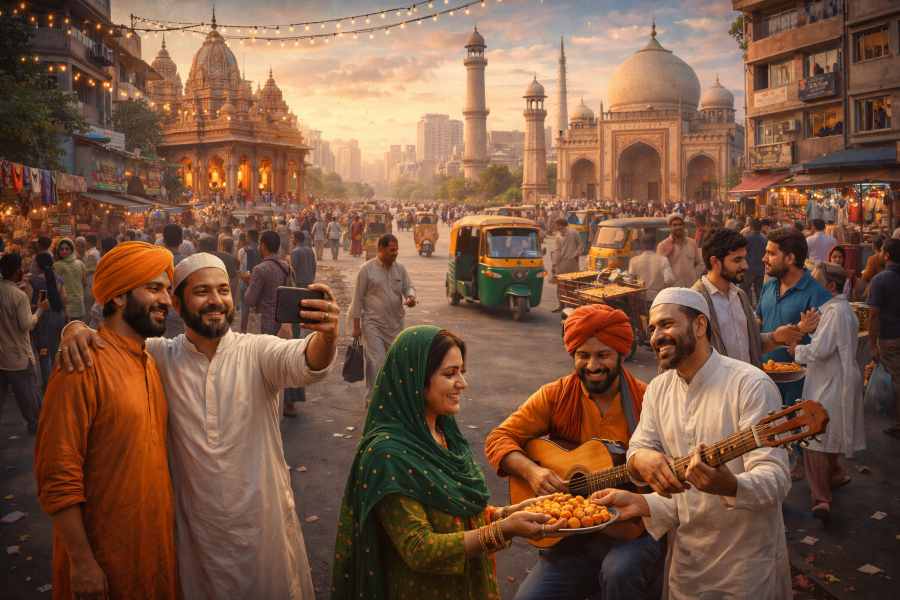
Tracing the historical roots and lived reality of Hindu Muslim cultural synthesis
WHAT IS INDIAN culture. Is it Hindu culture or a mixed one. Many such questions have been floating in the air. Those belonging to the Hindu right wing, the proponents of Hindutva and Hindu Rashtra, claim that it is a Hindu culture which was attacked by Muslim aggressors, while Hindu culture resisted with full energy.
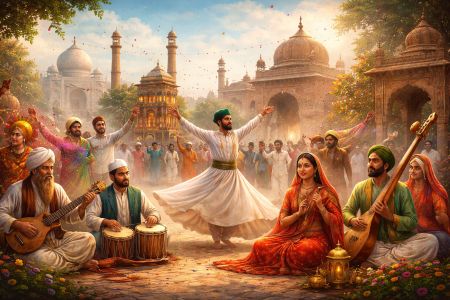
Syncretic spiritual traditions shaped medieval Indian culture
They also argue that some converts from Hinduism to Islam have not overcome their Hindu past while adapting to Islam. These thoughts came to one’s mind yet again during the recent debate in Kolkata on the theme Hinduism needs protection from Hindutva.
As such, Hindutva ideologues have been arguing this for quite some time. J Sai Deepak, one of those who participated in the Kolkata debate, has been arguing that post Independence the deification of what he calls the creature Ganga Jamuna Tehzeeb must be laid at the door of distortion of history.
According to him, this distortion was carried out under Jawaharlal Nehru and the Marxist Nehruvian coterie of historians that he put together. He traces the rise of this phenomenon to the period between 1916 and 1923.
The Meaning of Ganga Jamuna Tehzeeb
What is Ganga Jamuna Tehzeeb. It is synonymous with the development of a mixed culture between Hindus and Muslims over a long period of time, roughly close to a millennium. With the advent of Islam in the seventh century, Hindu Muslim interaction began and flowered in the medieval period of India.
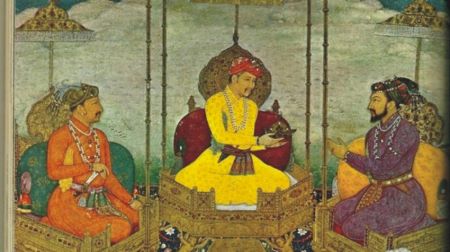 The aim of the Sultanate or Mughal rulers was not to wipe out the local culture. Primarily, they were here for wealth and power and ruled large parts of this land.
It was during this period that many syncretic traditions developed and many of them continue in different parts of the country even today, despite the intimidating impositions of Hindu nationalist politics.
This mixed culture began particularly in North India, in the Ganga Yamuna and adjacent areas, hence the nomenclature. This was underlined by many leaders of the freedom movement. Those who remained aloof from the freedom movement, both Muslim nationalists and Hindu nationalists, did not appreciate the intermingling of Hindus and Muslims.
Hindu Muslim interaction in all areas of social life flowered particularly in medieval India and continues even today, though in muted form in some places.
Syncretism in Religion Music Language and Art
Scholar B N Pandey summarises this very well:
“Islam and Hinduism, which appeared at the start so antithetical, at last intermingled. Each stirred the profoundest depths of the other, and from their synthesis grew the religion of Bhakti and Tasawwaf, the religion of love and devotion, which swept the hearts of millions following different religions and sects in India.
The current of Islamic Sufism and Hindu Bhakti combined into a mighty stream which fertilised old desolate tracts and changed the face of the country, and created those monuments of art, literature, painting, music, poetry, and love inspired religion which are the heritage of Indian history during the Middle Ages.”
Due to the interaction of Muslim kings, Islam, and local culture, a whole stream of synthetic culture developed in all walks of life. In music, khayal, ghazal, and thumri are outstanding contributions of this interaction. North Indian classical music, as known today, is a thorough blend of Hindu and Muslim elements achieved over nearly five hundred years.
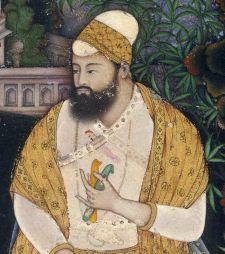
Ibrahim Adil Shah II
Ibrahim Adil Shah II of Bijapur, who ruled from 1580 to 1626, had three hundred Hindu singers in his court. To popularise this music among Muslims, he himself composed the Kitab e Naurang in Urdu, a book containing fifty nine poems, the first of which is an invocation of Goddess Saraswati.
Chaitanya Mahaprabhu and most of the Vaishnav saint poets influenced many Muslims to write in their idiom. Rahim and Raskhan are among the most popular Hindi poets who wrote in Braj Bhasha in praise of Lord Krishna. Syed Wazid Shah wrote Hir and Ranjha, the great classic of medieval times. Sheikh Mohammed made a major contribution to Marathi literature.
The mixture of Persian dialects with Western Hindi spoken in and around Delhi produced a new language, later called Urdu. There were many great Hindu scholars who adopted Urdu not only as an administrative language but also as a medium of literary expression.
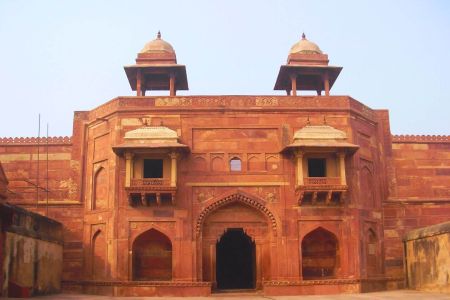
Jodha Bais Palace at Fatehpur Sikri
Hindu architecture was enriched by the profusion of intricate sculptural detail from Islamic architecture. The fusion of the two manifested in architectural marvels such as Jodhabai’s palace in the Agra Fort, Fatehpur Sikri, and the arches of the Quwwat ul Islam Mosque.
The influence of this mixture is visible in the havelis of Rajasthan and Madhya Pradesh and in the Indo Saracenic architecture of Jodhpur, Bikaner, and Jaisalmer. Similarly, the fusion of Persian techniques and brilliant Hindu colours resulted in miniature painting marked by beauty and lyricism.
Living Traditions and Contemporary Relevance
The observance of festivals was a profound social phenomenon. Hindu festivals like Diwali were celebrated as Jashn-e-Charagan, and Holi as Jashn-e-Gulabi. The Dussehra festival of Mysore, during the reign of Tipu Sultan, was celebrated for ten days under royal patronage. Tazia processions also became part of shared community life.
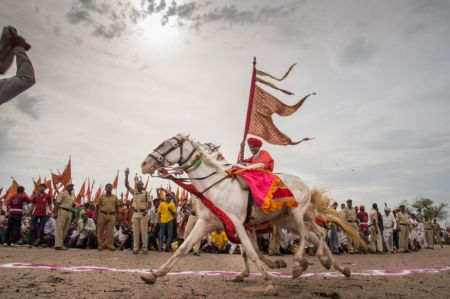
Varkari pilgrimage procession in Maharashtra
These traditions are very much alive even today. Researcher activist Irfan Engineer was recently part of Maharashtra’s Varkari Dindi. According to him, when the wari passes through a Muslim area during Eid or other festivals, the Muslim community defers its celebrations or includes Varkaris by sharing food. Many Muslims also join the wari.
We are well aware of the Hindu navratnas in Akbar’s court, such as Birbal and Todarmal. According to Professor Athar Ali, around thirty three percent of officials in Aurangzeb’s court were Hindus, including Raja Jaising and Raja Raghunath Bahadur.
The Maratha king Chhatrapati Shivaji Maharaj also had many Muslim commanders. Such examples abound across different spheres of Indian social life.
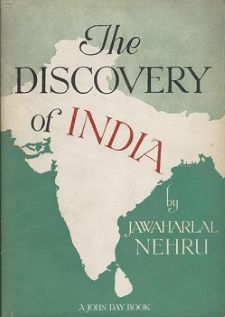 Commenting on Indian culture, Jawaharlal Nehru in his classic Discovery of India underlined the idea of Ganga Jamuni Tehzeeb. This was not a motivated comment but a reflection of our past and present. In the freedom movement, people from all religions participated with equal enthusiasm, except those opposed to pluralism and democracy.
Nehru described India as an ancient palimpsest, where new layers of history, culture, and thought were inscribed over older ones without completely erasing them. This created a continuous and complex civilisation with deep unity amidst diversity, emphasising synthesis and absorption rather than obliteration, a vision on which he sought to build a modern democratic nation.
In present times, when hate driven sectarian nationalism is promoting violence, there is an urgent need to uphold and defend the values of our Ganga Jamuni Tehzeeb. 
___________
Also Read:
When Hate Came to Kotdwar, ‘Mohammad’ Deepak Stood His Ground
Ram Puniyani
Author is a former professor of biomedical engineering and former senior medical officer affiliated with the Indian Institute of Technology Bombay.
Disclaimer : PunjabTodayNews.com and other platforms of the Punjab Today group strive to include views and opinions from across the entire spectrum, but by no means do we agree with everything we publish. Our efforts and editorial choices consistently underscore our authors’ right to the freedom of speech. However, it should be clear to all readers that individual authors are responsible for the information, ideas or opinions in their articles, and very often, these do not reflect the views of PunjabTodayNews.com or other platforms of the group. Punjab Today does not assume any responsibility or liability for the views of authors whose work appears here.
Punjab Today believes in serious, engaging, narrative journalism at a time when mainstream media houses seem to have given up on long-form writing and news television has blurred or altogether erased the lines between news and slapstick entertainment. We at Punjab Today believe that readers such as yourself appreciate cerebral journalism, and would like you to hold us against the best international industry standards. Brickbats are welcome even more than bouquets, though an occasional pat on the back is always encouraging. Good journalism can be a lifeline in these uncertain times worldwide. You can support us in myriad ways. To begin with, by spreading word about us and forwarding this reportage. Stay engaged.
— Team PT