


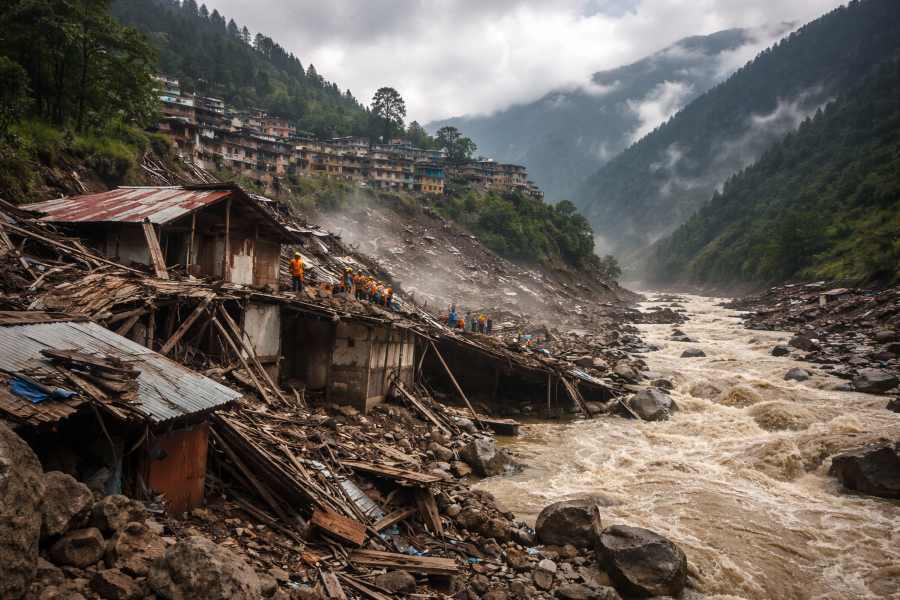
Two years after the 2023 floods and months after fresh 2025 losses, Himachal Pradesh is still waiting for timely and adequate Central disaster relief.
IN THE SUMMER of 2023, Himachal Pradesh witnessed devastation on a scale rarely seen in its modern history. Relentless cloudbursts, flash floods and landslides tore through the state’s fragile Himalayan ecology, snapping roads, washing away bridges and forcing entire habitations to slide downhill.
Rivers turned violent, connectivity collapsed and hundreds of people lost their lives, many without trace. Public infrastructure suffered irreparable damage and losses ran into tens of thousands of crores.
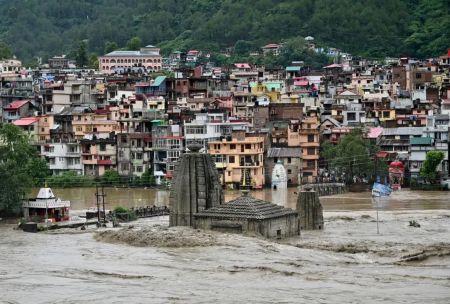
Floodwaters submerge a temple and surrounding town in Himachal Pradesh.
Beyond the financial toll, the psychological impact was profound: a resilient mountain state suddenly found itself struggling for survival and urgent assistance.
What made the tragedy deeper was not only the force of nature but what followed—a prolonged silence. While the destruction unfolded rapidly in 2023, meaningful Central financial relief began to materialise only towards the end of 2025.
By then, nature had struck again, compounding losses and exposing a harsh reality: relief that arrives years later ceases to be relief in any real sense.
Relief Promised, Assistance Delayed
After the fresh calamity in 2025, the Prime Minister announced a ₹1,500 crore rehabilitation package for Himachal Pradesh.
The announcement carried political and symbolic significance, yet months passed with little clarity on disbursement timelines or execution on the ground.
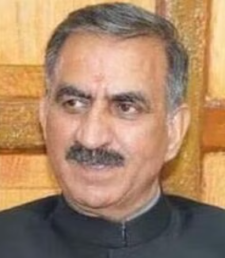
CM Sukhvinder Singh Sukhu.
The Chief Minister Thakur Sukhvinder Singh Sukhu repeatedly flagged that the assistance bore no proportion to the cumulative destruction suffered in both 2023 and 2025, calling it grossly inadequate against the scale of loss to lives, livelihoods and public assets.
The Union government, however, has maintained that Himachal has received substantial financial support.
In Parliament, figures exceeding ₹62,000 crore were cited for the period between 2022–23 and 2024–25 under various heads, including tax devolution, Finance Commission grants and special assistance.
On paper, the numbers appear impressive. But disaster relief is not routine fiscal transfer—it is emergency intervention.
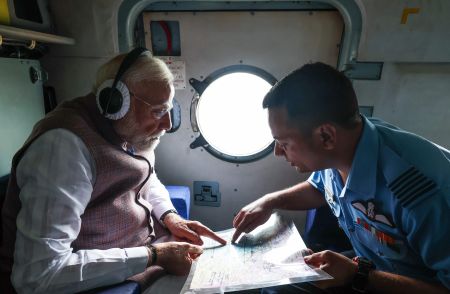
Prime Minister Narendra Modi during a visit to flood-hit areas of Himachal Pradesh.
Clubbing calamity assistance with standard budgetary allocations blurs a crucial distinction and weakens the very purpose of disaster response.
That disconnect became evident after the 2023 floods. A recovery proposal of just over ₹2,000 crore was approved, with the Centre’s share fixed at ₹1,504.80 crore under the National Disaster Response Fund.
Yet the first instalment was released only on December 27, 2025—over two years after the disaster—and that too with procedural conditions.
By then, the state had already restored roads, power supply and water systems by borrowing heavily and diverting scarce resources. What arrived felt less like relief and more like delayed reimbursement.
Climate Change, Human Pressure and a Governance Gap
Before Himachal could recover from the 2023 trauma, 2025 delivered another blow. Fresh spells of extreme rainfall and landslides led to nearly a hundred deaths, scores of missing persons and losses estimated at over ₹1,500 crore. The pattern is now unmistakable.
The Himalayas are entering an era of frequent, high-intensity climate disasters. Erratic rainfall, weakened slopes and overflowing rivers have become the new normal.
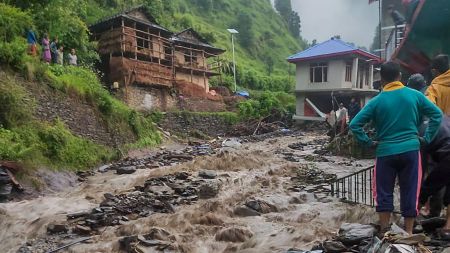
Flash floods damage homes and pathways in a hill village.
Human activity has amplified this fragility. Tourism has exceeded ecological limits, concrete has replaced natural buffers, highways have cut aggressively through mountains and hydropower projects have altered geological stability.
Experts warn of retreating glaciers, stressed rivers and long-term risks to agriculture, yet development policies continue to assume climatic stability that no longer exists. Each disaster exposes the cost of that assumption.
At the heart of the crisis lies a governance lag. Disaster management systems designed decades ago move slowly in an age where calamities unfold in hours.
Procedural delays, layered approvals and conditional fund releases may satisfy files, but they fail people facing immediate ruin. Rebuilding infrastructure in the same vulnerable zones only guarantees repetition.
What Himachal needs now is not episodic announcements but a shift in approach. Disaster assistance must be prompt and front-loaded, with accountability following relief—not preceding it.
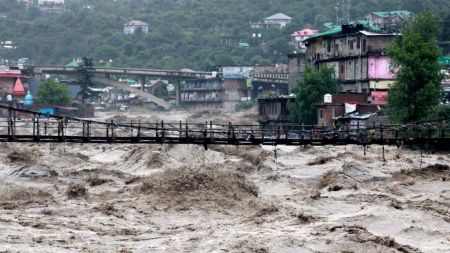
Raging floodwaters surge past a bridge after heavy rainfall.
Planning approvals require independent geological scrutiny, riverbeds must remain no-build zones and tourism must prioritise sustainability over numbers. Climate-resilient infrastructure, early warning systems and slope protection can no longer be optional.
The debate ultimately comes down to compassion versus procedure. Sanctioning funds is important, but timing defines intent.
Delayed relief breeds distrust and deepens suffering. The years between 2023 and 2025 stand as a warning of climate change colliding with bureaucratic inertia.
When aid arrives late, it balances accounts but not wounds. And when the Himalayas cry for help, sluggish responses leave ordinary people to bear the cost. 
__________
Also Read:
Punjab’s ₹10-Lakh Health Insurance Scheme: Big on Assurance, Still Short on Answers
Young, Unskilled, Unemployed: How India’s Demographic Advantage Is Slipping Away

K. S. Tomar
The writer, a senior political analyst, is a former Editor of the Hindustan Times' Rajasthan edition and has spent nearly four decades in journalism, including a six year stint in Nepal where he covered Sino-India-Nepal complex relationship and had a ringside seat to the Himalayan Kingdom's transition into democracy.
Disclaimer : PunjabTodayNews.com and other platforms of the Punjab Today group strive to include views and opinions from across the entire spectrum, but by no means do we agree with everything we publish. Our efforts and editorial choices consistently underscore our authors’ right to the freedom of speech. However, it should be clear to all readers that individual authors are responsible for the information, ideas or opinions in their articles, and very often, these do not reflect the views of PunjabTodayNews.com or other platforms of the group. Punjab Today does not assume any responsibility or liability for the views of authors whose work appears here.
Punjab Today believes in serious, engaging, narrative journalism at a time when mainstream media houses seem to have given up on long-form writing and news television has blurred or altogether erased the lines between news and slapstick entertainment. We at Punjab Today believe that readers such as yourself appreciate cerebral journalism, and would like you to hold us against the best international industry standards. Brickbats are welcome even more than bouquets, though an occasional pat on the back is always encouraging. Good journalism can be a lifeline in these uncertain times worldwide. You can support us in myriad ways. To begin with, by spreading word about us and forwarding this reportage. Stay engaged.
— Team PT