


Rising screen dependency is damaging emotional health, shrinking social skills and disrupting academics, as experts urge policy action and parental awareness.
A POTENT AND long-impacting pandemic across the world, but with varied and far more serious consequences in India, is causing grave concern to citizens, particularly to the parents of young children.

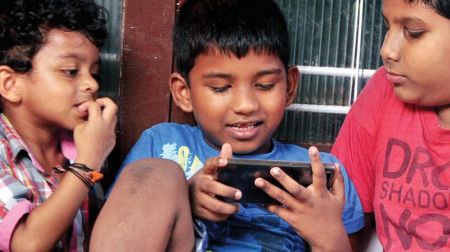
Yes, it’s the mobile phone pandemic that is threatening long-term consequences for individuals as well as society as a whole. Almost every family with young children is faced with the problem and is finding it difficult to grapple with the issue.
The government has so far refrained from proactively dealing with the problem, although it has imposed restrictions on certain websites to prevent those below the age of 18 from taking membership. However, even this directive is flouted with impunity due to the lack of clear regulations and strict penalties.
There are now over 1.2 billion active SIM cards in India for a population of about 1.5 billion citizens. According to official sources, over 80 per cent of Indians are now active users of mobile phones.
Also Read: UNSOCIAL MEDIA
Given its position as the most populated country in the world, India would be among the top three mobile phone users globally.

However, unlike most other parts of the world, there is great disparity in the awareness levels of parents of small children in India regarding the impact of prolonged mobile phone use on the mental and physical health of children.
It is sad to see young parents gloating over infants screaming when a mobile device is taken away from them or boasting about how their young ones know how to operate the devices much better than themselves.
Many young mothers prefer to hand over mobile phones to small children or switch on television sets to calm them down or keep them busy.
This is done despite clear medical advice regarding the harmful impact not only on the eyes but also on the overall physical growth of children addicted to such devices.
The Hidden Consequences: Sleep Loss, Social Isolation and Mental Stress
Among the most serious consequences of unfettered access to mobile phones is lack of adequate sleep as children get caught in the maze of video games or social media platforms. The lack of enough sleep, in turn, affects their concentration and leads to poor academic performance.

Obviously, the prolonged time spent scrolling the screen also leads to poor social skills. Instead of spending time with their friends and peers, these children grow up with inadequate social skills and lack confidence.
By constantly living in a make-believe world, most of which is unattainable and mere fantasy, children tend to feel inadequate, which leads to anxiety and other mental disorders. Also, children are spending less time outdoors or meeting and playing with peers.
There is no doubt that access to mobile devices and new technology is vital for the dissemination of knowledge. These are essential for learning through online resources and are critical for schools, particularly in underprivileged areas lacking libraries or computers.
With the world growing at a fast pace, depriving our younger generation of quick learning would certainly be disastrous.
Also Read: SCHOLARSHIP TO SMARTPHONE
The moot question, therefore, is how to prevent excessive and unproductive use of mobile devices while not depriving students of the immense benefits offered by technology.
Learning From Global Examples and Moving Forward
Australia is the first country in the world to come out with legislation to enforce a minimum age for access to various websites. Perhaps this legislation could pave the way for similar interventions in other countries, including India.
Under its new law, platforms such as Instagram, YouTube and Snap have been asked to block more than a million accounts of users below the age of 16. The legislation has drawn criticism from tech companies but support from parents and educators.
Under the new law, called the “Online Safety Amendment (Social Media Minimum Age) Act,” age-restricted platforms will be expected to take “reasonable” steps to find existing accounts held by under-16s and deactivate or remove those accounts.
They must also prevent such users from opening new accounts and prohibit any workarounds that may allow under-16s to bypass the restrictions.
Platforms also need to have processes to correct errors if someone is mistakenly missed or wrongly included in the restrictions so no one’s account is removed unfairly.
The restrictions aim to protect young people from the “pressures and risks” that users can be exposed to while logged in to social media accounts.
According to a survey conducted by the Australian government, 84 per cent of children below the age of 16 had seen or heard harmful content and over 50 per cent had experienced cyberbullying.
The new legislation has placed the onus on social media platforms to show that they have taken “reasonable steps” to prevent access to children, with no penalties for the users.

It is high time the government — and more importantly, parents — take proactive steps to stem this epidemic. This should be done in conjunction with teachers and school managements.
Doctors and psychologists too must be involved in the effort to wean children away from the harmful impact of spending long periods of time on social media.
Also Read: CURRENT OBSESSION
The government alone can’t check the growing addiction of children to the virtual world, but it would do well to launch an intensive awareness drive among young parents, both in urban and rural areas, to spread awareness about the potential adverse impact on the development and personality of their children. 
_________
Also Read:
Hollowness of Punjab ‘Holy City’ Gazette Notification: Leaves More Questions Than Answers
Sekhonwal Gram Sabha Orders Return of Panchayat Land Taken for Mattewara Project

Vipin Pubby
The author, a freelance journalist, is a former Resident Editor of Indian Express, Chandigarh, and reported on the political developments in Jammu and Kashmir, North-Eastern India, Gujarat, Himachal Pradesh, Haryana and Punjab in his long, illustrious career.
Disclaimer : PunjabTodayNews.com and other platforms of the Punjab Today group strive to include views and opinions from across the entire spectrum, but by no means do we agree with everything we publish. Our efforts and editorial choices consistently underscore our authors’ right to the freedom of speech. However, it should be clear to all readers that individual authors are responsible for the information, ideas or opinions in their articles, and very often, these do not reflect the views of PunjabTodayNews.com or other platforms of the group. Punjab Today does not assume any responsibility or liability for the views of authors whose work appears here.
Punjab Today believes in serious, engaging, narrative journalism at a time when mainstream media houses seem to have given up on long-form writing and news television has blurred or altogether erased the lines between news and slapstick entertainment. We at Punjab Today believe that readers such as yourself appreciate cerebral journalism, and would like you to hold us against the best international industry standards. Brickbats are welcome even more than bouquets, though an occasional pat on the back is always encouraging. Good journalism can be a lifeline in these uncertain times worldwide. You can support us in myriad ways. To begin with, by spreading word about us and forwarding this reportage. Stay engaged.
— Team PT