


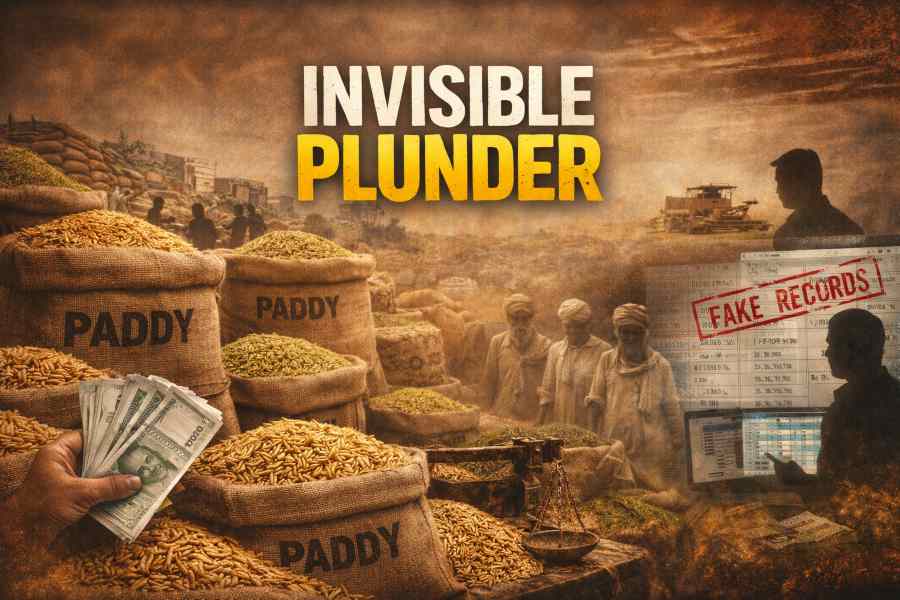
When people talk about mafias in Punjab, the conversation usually turns to sand mining or liquor vends. These mafias are visible. Trucks can be intercepted, mines sealed, liquor shops raided, and dramatic visuals beamed into television studios.
But the most powerful mafia operating in Punjab today is far more silent, far more organised, and far more damaging. It is the foodgrain procurement mafia, entrenched deep inside mandis, rice mills, warehouses, transport systems, and procurement offices, quietly siphoning off money meant for farmers and taxpayers.
Haryana’s Ghost Paddy Scam Shows This Is Not Speculation
In Haryana, a massive paddy procurement scam has already been exposed. This is no longer a matter of allegation or suspicion. Multiple arrests have been made, FIRs registered, officials suspended, and Special Investigation Teams (SITs) constituted.
In districts like Karnal, investigations uncovered what the police themselves called “ghost procurement” — paddy shown as procured in official records even though it never physically arrived at the mandi.
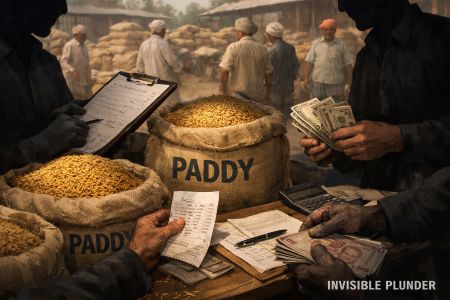
Fake gate passes were generated, procurement entries were made without any grain movement, and payments were released against paper stocks. Physical verification later revealed massive mismatches between records and actual stocks.
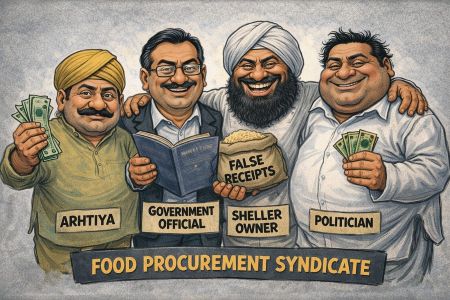
Those arrested include mandi officials, procurement agency staff, arhtiyas, and rice millers. Farmers in Haryana have protested openly, demanding a CBI probe and alleging that losses run into thousands of crores and that the scam is being deliberately underplayed.
This background matters. When such a scam stands proven in Haryana, with arrests and FIRs, it becomes impossible to dismiss similar allegations in Punjab as mere speculation or political noise.
Why Punjab Cannot Pretend This Is Rumour
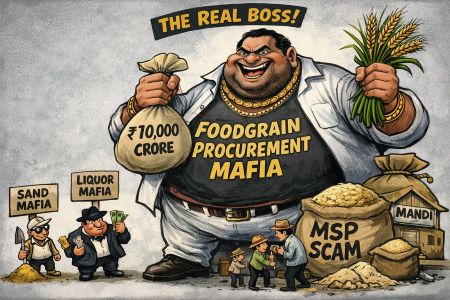
The biggest mafia in Punjab is not the sand mafia or the liquor mafia. We hear about those because they are visible. Trucks can be stopped. Mines can be sealed. Liquor vends can be raided. They generate dramatic visuals, headlines, and television debates.
But there is a much larger, quieter, and far more dangerous mafia operating in Punjab — the foodgrain procurement mafia. It operates inside mandis, rice mills, warehouses, transport networks, and procurement offices. It handles money meant for farmers. And it hides theft behind files, forms, and computer entries.
This is not rumour. The Central Government has officially asked the Punjab Government to investigate a major paddy procurement scam during the 2025–26 season. The suspected loss is estimated between ₹6,000 crore and ₹10,000 crore.
This direction came from the Department of Revenue, Ministry of Finance, instructing Punjab’s Food and Civil Supplies Department to examine the complaint and submit a report by 13 February 2026. This was not a casual or political instruction. It was an institutional intervention.
What the Complaint Says About the Paddy Scam
According to reports, the complaint was filed by a commission agent and rice mill owner from Sangrur. The allegations are serious and detailed. Bogus paddy purchases were allegedly shown through fake J-Forms, triggering MSP payments directly into farmers’ bank accounts even though no paddy was actually sold. The money released through these fake purchases was allegedly shared among farmers, arhtiyas, rice millers, and procurement officials.
Cheaper paddy from outside Punjab, often around ₹600 per quintal cheaper than MSP, was allegedly passed off as Punjab-grown paddy to claim higher MSP and inflate procurement figures.
Fake gate passes and miller receipts were generated for grain that never physically entered mandis or mills. Procurement staff and mandi officials allegedly took kickbacks for “verifying” fake stocks.
Punjab officials have responded by saying that the allegations are yet unsubstantiated and that records are being verified. That may be so. But the scale of the alleged fraud and the Centre’s direct intervention cannot be brushed aside.
How Farmers Are Actually Looted Inside Mandis
There is a dangerous myth that farmers benefit from the procurement system. In reality, they don’t. Inside the mandi, the farmer has no holding power and no bargaining power. He cannot take his produce back. He cannot wait indefinitely. He faces a cartel sitting across the table.
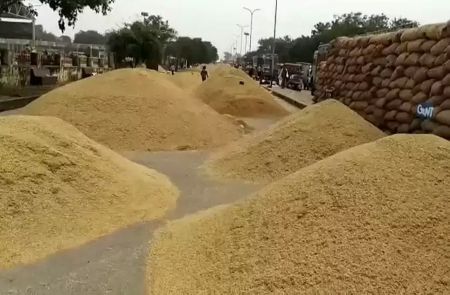
Under the garb of excess moisture, discoloration, wrong variety, or recovery percentage, his produce is delayed, downgraded, or rejected. Pressured and helpless, he sells, often below MSP, even though MSP exists on paper.
Ironically, repeated purchases below MSP create fear and insecurity among farmers. They then demand a legal guarantee of MSP, without realising that the core problem is not the absence of law, but the presence of systematic loot within procurement itself.
The ₹31,000-Crore Legacy Loan Was the First Warning
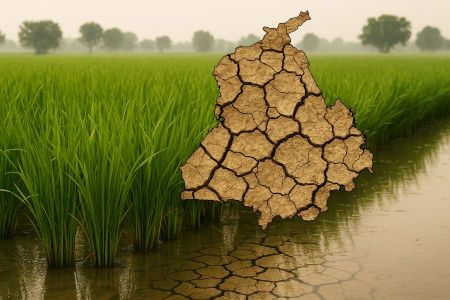
This rot is not new. In 2016, the outgoing Akali–BJP government accepted a ₹31,000-crore “legacy loan” linked to procurement accounts. That figure was never clearly explained to the public.
It was widely known that it arose from food stock mismatches, inflated transport bills — sometimes motorcycles shown as trucks — gunny bag scams, and unverifiable procurement entries.
Instead of ordering a forensic audit and fixing responsibility, the amount was converted into long-term state debt. The burden was passed on. The system remained untouched. The message was clear: even massive procurement failures would be absorbed, while the cost would ultimately be borne by the common man.
From Procurement Mafia to Protest Politics
Every year, Punjab farmers sell wheat and paddy worth over ₹80,000 crore to government procurement agencies. When such enormous sums move through a system with discretion and weak oversight, even a small percentage siphoned off becomes thousands of crores. Part of this loss is borne by farmers. The rest is absorbed by the Central Government and ultimately by taxpayers.

There is also an uncomfortable political truth. The economic anxiety behind the 2020 Kisan Andolan was not limited to the text of the farm laws. It was also driven by fear that structural reform would disrupt entrenched procurement interests.
The initial mobilisation was not purely farmer-led in the romantic sense. It was system-driven, financed, and organised by those whose fortunes depend on the existing procurement architecture. Over time, it acquired ideological and identity layers, giving it emotional depth and staying power.
The Alarm Bell Punjab Can No Longer Ignore
This is not a technical accounting issue, as the ₹31,000-crore legacy account was once presented. It is organised theft, loot, and dacoity on a massive scale, protected by political interests and institutional silence. The legacy loan was the warning. The ₹10,000-crore paddy probe is the alarm bell.
Also Read: The Rice That Ate Punjab
If MSP is to mean anything, and if Punjab’s agriculture is to survive with dignity, this racket must be named, investigated, and dismantled. Punjab’s farmers have already lost enough to a multi-faced mafia that remains largely invisible, yet is far bigger and more damaging than the sand or liquor mafia. 
___________
Also Read:
New Japanese Material Dissolves in Seawater, Offering Hope Against Microplastics
Turban, Throne and Theatre: The Absurd Revival of Royal Rituals in a Democracy

Gurpartap Singh Mann
With prior experience as a Member of the Punjab Public Service Commission, the author brings a nuanced perspective to issues of governance and social change.
Disclaimer : PunjabTodayNews.com and other platforms of the Punjab Today group strive to include views and opinions from across the entire spectrum, but by no means do we agree with everything we publish. Our efforts and editorial choices consistently underscore our authors’ right to the freedom of speech. However, it should be clear to all readers that individual authors are responsible for the information, ideas or opinions in their articles, and very often, these do not reflect the views of PunjabTodayNews.com or other platforms of the group. Punjab Today does not assume any responsibility or liability for the views of authors whose work appears here.
Punjab Today believes in serious, engaging, narrative journalism at a time when mainstream media houses seem to have given up on long-form writing and news television has blurred or altogether erased the lines between news and slapstick entertainment. We at Punjab Today believe that readers such as yourself appreciate cerebral journalism, and would like you to hold us against the best international industry standards. Brickbats are welcome even more than bouquets, though an occasional pat on the back is always encouraging. Good journalism can be a lifeline in these uncertain times worldwide. You can support us in myriad ways. To begin with, by spreading word about us and forwarding this reportage. Stay engaged.
— Team PT