


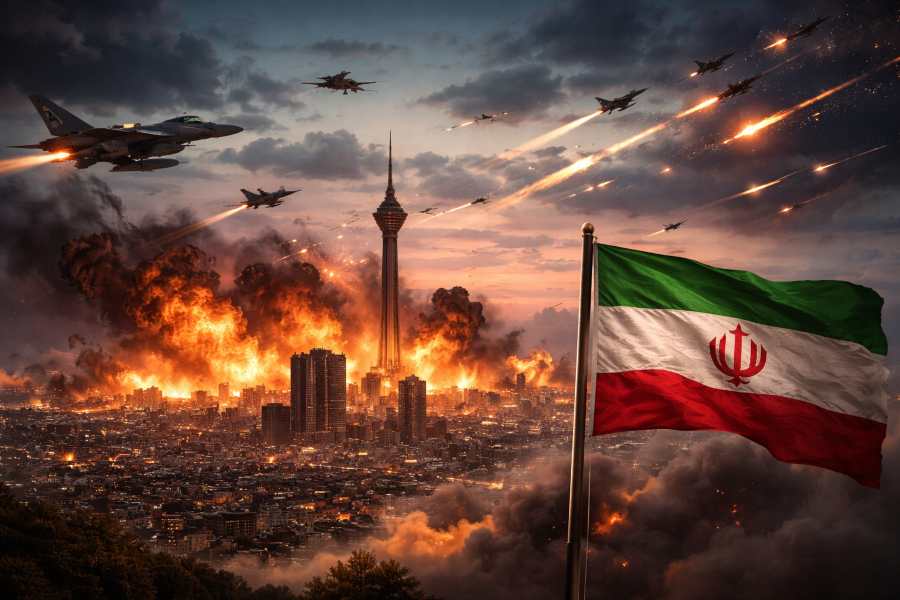
THE LATEST ATTACKS by Iran and Israel on each other herald a horrific and decisive phase in their confrontation. It is no longer merely a traditional war of words between two countries, but a development that may permanently alter the geographical and political map of the Middle East.
From Historical Background to Direct Confrontation
For almost four decades, Israel and Iran have fought a “shadow war” against each other, involving cyberattacks, targeted killings, and proxy conflicts.
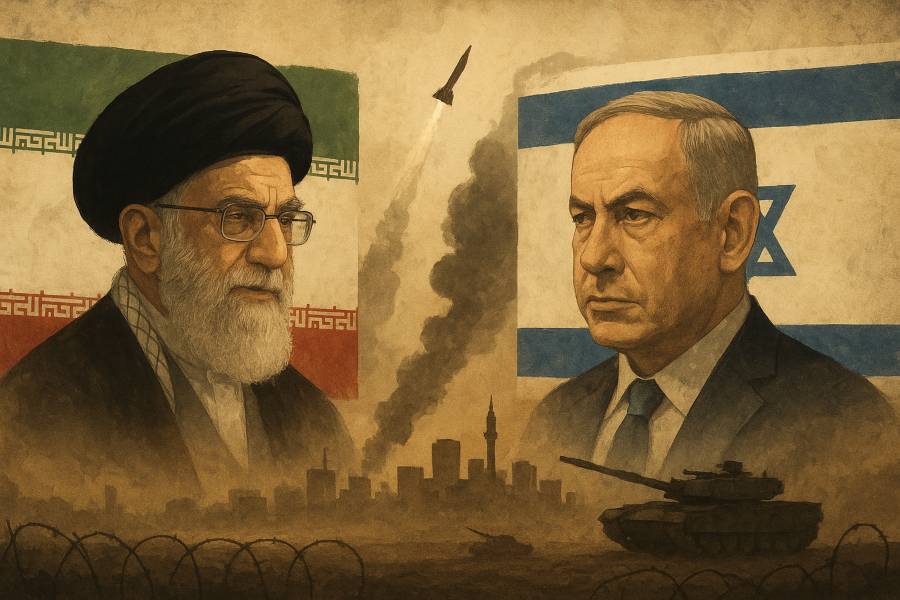
Iran and Israel move from shadow conflict toward direct confrontation.
However, the Israeli attack on the Iranian consulate in Damascus on April 1, 2024, followed by Iran’s first direct strike on Israel from its own territory using hundreds of drones and missiles, broke all previous precedents.
By 2025 and early 2026, this confrontation has evolved into what increasingly resembles a regional war.
Israel’s New Military Strategy: “Operation Lions Roar” (February 2026)
Events in February 2026 indicate that Israel has decided to dismantle Iran’s nuclear and military programmes. On February 28, 2026, Israel launched “Operation Lions Roar,” targeting sensitive locations in Tehran, including leadership facilities and strategic offices.
Attacks on nuclear facilities: By striking Iran’s nuclear centres at Natanz and Fordow, Israel sent a clear message that it is prepared to go to any extent to prevent Iran from becoming a nuclear power.
End of strategic patience: Iran, which previously operated largely through proxies such as Hezbollah, Hamas, and the Houthis, is now being directly targeted. Explosions in the Iranian capital have also exposed weaknesses within Iran’s security institutions.
America’s Role and Direct Involvement
In the present situation, America’s role is no longer that of a mere supporter. Following recent directives from President Donald Trump, US forces have launched what are being described as “major combat operations” against Iran.
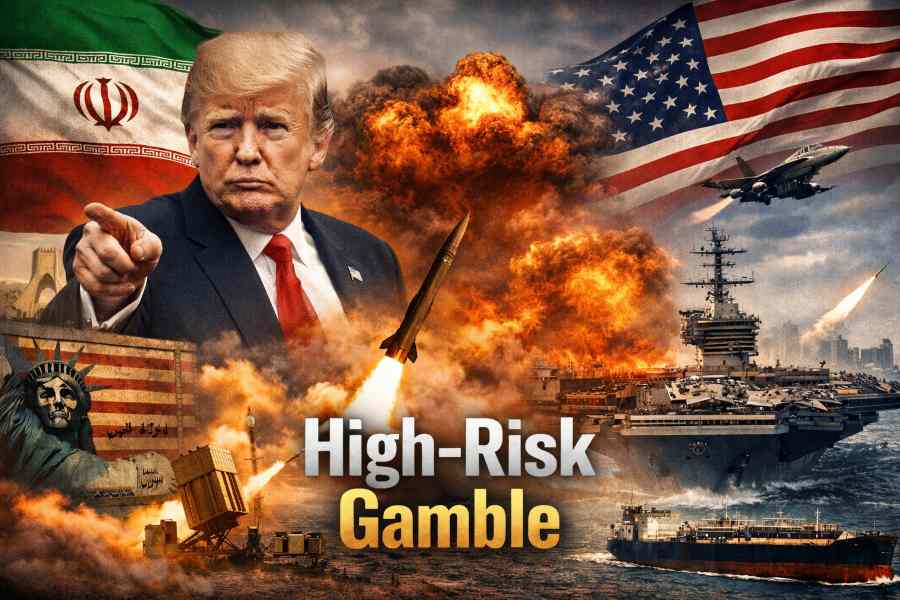
Washington’s direct military posture raises stakes in the Middle East crisis.
Deployment of naval fleets: The presence of US Navy ships, including USS Gerald R. Ford and USS Abraham Lincoln, in the Persian Gulf has significantly intensified pressure on Iran.
Turning point: The commencement of bombing operations after the expiry of the US deadline for Iran to abandon its nuclear ambitions marks a new turning point in global politics.
Gulf States: A Difficult Strategic Dilemma
The Israel-Iran war has placed Gulf States — Saudi Arabia, the United Arab Emirates, Qatar, and Kuwait — in an extremely complex strategic position. Iranian attacks on American bases in these countries suggest that Iran may expand its targets beyond Israel and US assets to include nations perceived as supporting them.
Saudi Arabia and the UAE: While both countries fear Iran’s growing influence and reportedly cooperate with Israel on intelligence matters, they remain wary of Iranian missile strikes on critical oil infrastructure such as Aramco facilities.
The importance of Qatar: Qatar, host to the region’s largest US military base at Al-Udeid, is attempting to mediate diplomatically while also safeguarding itself against potential Iranian retaliation.
Regional economic risks: Any closure of the Strait of Hormuz by Iran would send global oil prices soaring, paralysing Gulf economies and severely disrupting global supply chains.
Confrontation in Syria and Lebanon
Israel has significantly weakened Syria’s air defence systems to facilitate operations against Iranian targets, enabling wider operational access in the region.
Hezbollah’s weakness: Despite a November 2024 ceasefire in Lebanon, Israel continues to target Hezbollah weapons shipments. Once Iran’s most powerful proxy, Hezbollah now appears internally strained.
Iraq’s role: Pro-Iranian militias in Iraq have launched drone attacks on Israel, prompting retaliatory strikes and raising concerns about violations of Iraqi sovereignty.
Technological Superiority: Missiles vs. Laser Systems
Advanced weapons systems define the technological dimension of the war.
A defining feature of this conflict is technological competition. Israel has relied on advanced defence systems such as “Arrow” and “David’s Sling,” while activating its “Iron Beam” laser defence system by late 2025.
Yet relatively low-cost Iranian missiles, capable of saturation attacks, have demonstrated the ability to challenge even highly sophisticated and expensive defence systems.
Iran’s Internal Situation
Alongside the external conflict, Iran faces mounting internal pressures. Economic sanctions and wartime disruptions have fuelled inflation, while unrest and protest waves have emerged in several cities.
Israel and the United States are believed to be attempting to leverage this public dissatisfaction to encourage regime change.
Impact on World Peace and the Future Road Map
This conflict is no longer confined to the Middle East. Russia and China’s tacit support for Iran, contrasted with NATO and US backing for Israel, has intensified fears of a broader global confrontation.
Impact on Pakistan and India: The situation is particularly worrying for South Asian countries, as millions of Indian and Pakistani workers reside in Gulf nations and would be directly affected by any regional escalation.
The Israel-Iran conflict has now reached a stage from which retreat appears increasingly difficult. Israel seeks to eliminate Iran’s “strategic depth,” while Iran views the confrontation as a struggle for survival.
If hostilities continue, the development ambitions of Gulf countries may suffer severe setbacks, and the world could face a prolonged economic crisis. The international community must intervene urgently; otherwise, this fire in the Middle East risks engulfing the entire world. 
_____________
Also Read:

Asad Mirza
The author is a New Delhi-based senior commentator on national and international affairs, defence and strategic issues, and environmental concerns. He is also an interfaith practitioner and a media consultant. Previously, he was associated with the BBC Urdu Service and the Khaleej Times in Dubai.
Disclaimer : PunjabTodayNews.com and other platforms of the Punjab Today group strive to include views and opinions from across the entire spectrum, but by no means do we agree with everything we publish. Our efforts and editorial choices consistently underscore our authors’ right to the freedom of speech. However, it should be clear to all readers that individual authors are responsible for the information, ideas or opinions in their articles, and very often, these do not reflect the views of PunjabTodayNews.com or other platforms of the group. Punjab Today does not assume any responsibility or liability for the views of authors whose work appears here.
Punjab Today believes in serious, engaging, narrative journalism at a time when mainstream media houses seem to have given up on long-form writing and news television has blurred or altogether erased the lines between news and slapstick entertainment. We at Punjab Today believe that readers such as yourself appreciate cerebral journalism, and would like you to hold us against the best international industry standards. Brickbats are welcome even more than bouquets, though an occasional pat on the back is always encouraging. Good journalism can be a lifeline in these uncertain times worldwide. You can support us in myriad ways. To begin with, by spreading word about us and forwarding this reportage. Stay engaged.
— Team PT