


How two recent films quietly challenge Bollywood’s long-standing stereotypes of Muslim life and womanhood
FOR MUCH OF Hindi cinema’s history, Muslim characters have occupied a narrowly defined moral and visual frame.
In earlier films, they appeared either as upright allies—Inspector Khan or Ali, loyal and self-sacrificing—or as caricatures: the street urchin in a skullcap and mesh vest chewing paan, or the sherwani-clad Nawab Sahib bending at a ninety-degree angle in elaborate adaab.
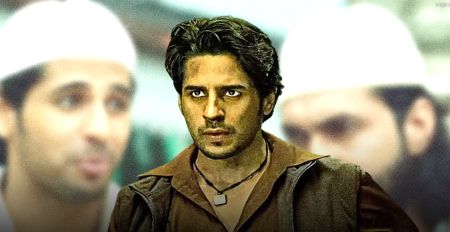
Stereotypes that shaped Muslim representation in cinema
These figures were recognisable but rarely real, their identities flattened into shorthand.
In recent decades, this frame has hardened into suspicion. The Muslim character has increasingly been normalised as the villain, the extremist, or the perpetual outsider.
This shift mirrors a broader social and political polarisation, where representation no longer generates empathy but anxiety.
What has been steadily erased in this process is normalcy—the everyday lives of Muslim families navigating work, aspiration, compromise, and survival like millions of others.
From Caricature to Suspicion: How Muslim Representation Changed
Against this backdrop, The Great Shamsuddin Family, written and directed by Anusha Rizvi of Peepli Live fame, and Single Salma, directed by Nachiket Samant and written by Mudassar Aziz, arrive as rare and quietly radical interventions.
Both films centre Muslim women not as symbols, metaphors, or ideological statements, but as protagonists negotiating deeply contemporary realities.
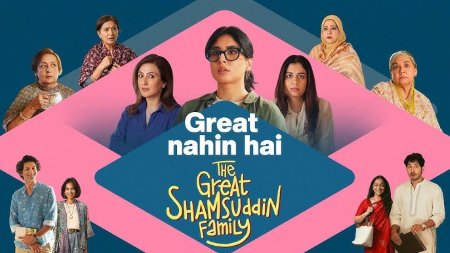
The Great Shamsuddin Family explores everyday Muslim middle-class life
Their stories unfold not through extraordinary crises, but within the familiar terrain of family obligation, economic pressure, emotional labour, and personal choice.
The Great Shamsuddin Family is especially rooted in the present moment. Its lead character, Bani Ahmed, portrayed by Kritika Kamra, is educated, articulate, and emotionally conflicted. Recently separated from her Hindu partner, she is seeking employment in the United States.
The interfaith relationship is treated without sensationalism, suggesting a time when such unions were lived experiences rather than endlessly debated political flashpoints.
The film does not foreground politics, yet the current polarised climate is ever-present—surfacing in passing conversations, unspoken anxieties, and the quiet recalibration of dreams. Bani’s desire to leave is shaped not only by ambition but by a growing unease, an awareness that social spaces are narrowing.
The political context is not the plot, but it informs the emotional logic of the story, much as it does in everyday life.
Muslim Women on Screen: Ordinary Lives, Quiet Resistance
Single Salma tells a story unfolding simultaneously in countless Muslim households across India.
Salma, played by Huma Qureshi, is the eldest daughter who becomes the emotional and economic anchor of her family. She postpones her personal life to shoulder responsibility, not as an act of rebellion or martyrdom, but as a matter of necessity.

Single Salma centres a woman balancing responsibility and independence
Her independence is neither romanticised nor framed as defiance. Instead, the film captures a form of quiet endurance, where education becomes survival and agency is exercised through persistence rather than protest.
What distinguishes Salma is not exceptionality but recognisability. She represents a generation of working-class and lower-middle-class Muslim women who hold families together while remaining largely invisible in public narratives.
By placing her at the centre, the film restores narrative dignity to a life often taken for granted.
Significantly, both films depict their protagonists as single, highly competent women in well-paying professions—an image strikingly absent from mainstream portrayals of Muslim women.
For perhaps the first time, working middle-class Muslim women are shown carrying the responsibility of their families while simultaneously asserting independence. They are not defined solely by tradition, victimhood, or dependence, but as capable decision-makers balancing emotional labour, financial accountability, and personal autonomy.
Normalising Muslim Middle-Class Life in Indian Cinema
Equally important is how this normalcy is performed. Kritika Kamra and Huma Qureshi play their characters like ordinary working women, deliberately stripped of stereotypical markers often associated with Muslim identity on screen.
There are no exaggerated adaabs, no performative Lucknowi etiquette, no ornamental signifiers meant to announce “Muslimness”.
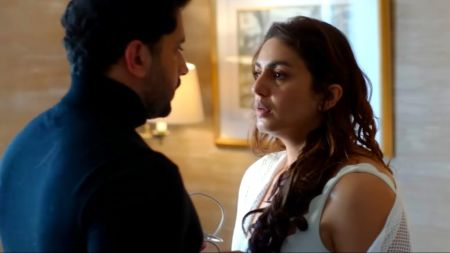
A moment of quiest emotional realism in movie Single Salma
Instead, the characters are grounded in everyday realism—their professional competence, emotional depth, and individuality shaping their identities far more than cultural caricatures.
This realism quietly addresses a familiar social experience. Modern working Muslims are often confronted with the remark, “You don’t look like a Muslim,” a statement that reveals how narrowly Muslim identity has been imagined in popular culture.
Both The Great Shamsuddin Family and Single Salma challenge this assumption without overt or didactic intent.
By portraying Muslim protagonists as part of the everyday Indian middle class—concerned with jobs, finances, family responsibilities, and personal aspirations—the films normalise Muslim lives rather than exoticise them.
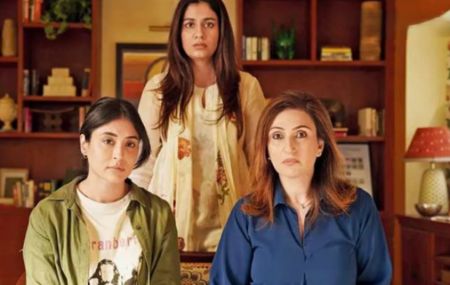
Women at the centre of The Great Shamsuddin Family
They insist that Muslim middle-class existence is not an exception but an integral part of the broader Indian social fabric. Both narratives also arrive at remarkably similar conclusions.
Despite differing circumstances, Bani and Salma choose the same core principle: independence with dignity. Educated and strong-willed, they resist social pressure to exchange autonomy for security, marriage, or approval.
Their choices are not framed as triumphs or failures, but simply as decisions—to live on their own terms. There is no dramatic catharsis or moral grandstanding.
Instead, the films end on a quieter assertion: that self-respect and independence are valid, sufficient endings. In a cinematic landscape that often demands resolution through sacrifice or submission, this restraint feels quietly radical.

Mainstream cinema’s familiar moral binaries
Together, The Great Shamsuddin Family and Single Salma challenge not only how Muslim characters are portrayed, but how women’s agency itself is imagined.
They refuse the binaries Bollywood increasingly relies upon—the “good” Muslim versus the “bad” Muslim, the “modern” woman versus the “traditional” one. Identity here is neither defence nor accusation; it is simply part of life.
Also Read: Playing To Galleries: Holy City or Holy Confusion?
In choosing to depict Muslim women as educated, independent individuals pursuing dignified lives, these films do something deceptively simple and profoundly necessary.
In an age of noise and polarisation, showing ordinary lives with honesty becomes, in itself, an act of resistance. 
__________
Also Read:
SAHITYA AKADEMI AWARDS ROW: Power Comes A-Knocking, or Writers Go Knocking at Power’s Door?
Vande Mataram Controversy: The Author, the Ideological Roots, and the Debate in Parliament

Asif Ullah Khan
The author is a seasoned journalist who has been associated with Khaleej Times (Dubai) and Brunei Times (Brunei).
Disclaimer : PunjabTodayNews.com and other platforms of the Punjab Today group strive to include views and opinions from across the entire spectrum, but by no means do we agree with everything we publish. Our efforts and editorial choices consistently underscore our authors’ right to the freedom of speech. However, it should be clear to all readers that individual authors are responsible for the information, ideas or opinions in their articles, and very often, these do not reflect the views of PunjabTodayNews.com or other platforms of the group. Punjab Today does not assume any responsibility or liability for the views of authors whose work appears here.
Punjab Today believes in serious, engaging, narrative journalism at a time when mainstream media houses seem to have given up on long-form writing and news television has blurred or altogether erased the lines between news and slapstick entertainment. We at Punjab Today believe that readers such as yourself appreciate cerebral journalism, and would like you to hold us against the best international industry standards. Brickbats are welcome even more than bouquets, though an occasional pat on the back is always encouraging. Good journalism can be a lifeline in these uncertain times worldwide. You can support us in myriad ways. To begin with, by spreading word about us and forwarding this reportage. Stay engaged.
— Team PT