


When Government Transparency Becomes a Gate-Kept Secret
JUST DAYS AFTER the Punjab & Haryana High Court cautioned district magistrates across Punjab against the mechanical and routine use of Section 163 of the Bharatiya Nagarik Suraksha Sanhita (BNSS), the Patiala administration issued multiple sweeping prohibitory orders — all under the same provision the Court said must be used sparingly, carefully, and only in genuine emergencies.
What the High Court Said on Section 163 BNSS
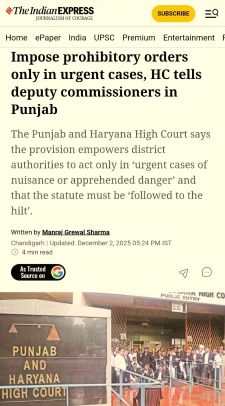
On 2 December 2025, the Punjab and Haryana High Court disposed of a Public Interest Litigation (PIL) challenging the indiscriminate and prolonged use of prohibitory orders issued earlier under Section 144 CrPC — now Section 163 BNSS.
While doing so, the Court issued clear and categorical directions to all Deputy Commissioners and District Magistrates in Punjab to strictly follow statutory safeguards and record detailed reasons whenever these extraordinary powers are invoked.
“We advise the district magistrates of all the districts in the state of Punjab to ensure compliance with Section 163 BNSS and other related provisions. Whenever the occasion arises to exercise the said power in emergent cases of nuisance and apprehended danger, due care and caution should be exercised while passing orders judiciously…
these provisions must not be applied in a mechanical manner without application of mind… the district magistrate or sub-divisional magistrate must… pass a speaking order,” the Court ordered.
 A Division Bench comprising Chief Justice Sheel Nagu and Justice Sanjiv Berry issued the directions while hearing a PIL by Harmilap Singh Grewal of Bathinda, who highlighted how Section 163 BNSS — a law meant strictly for urgent and exceptional situations — was being mechanically imposed across districts, often through repeated back-to-back prohibitory spells.
Re-emphasising the statutory limits, the Court made it clear that Section 163 is intended only for “urgent cases of nuisance or apprehended danger,” and must never become a routine administrative shortcut.
High Court Cautions — But Patiala Administration Accelerates
Instead of restraint, the Patiala ADM’s office appears to have accelerated its use of extraordinary powers.
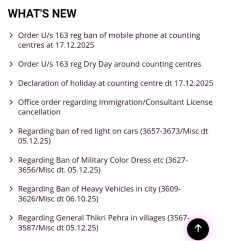
ADM orders list
Orders dated 4 December and 5 December 2025 were uploaded on the district website on 8 December, covering a sweeping range of issues:
Bans on red beacons on cars, Prohibition on military-pattern clothing, Restrictions on heavy vehicles, Blanket bans on weapons, Regulations on Thikri Pehra in villages and religious places, Restrictions on drugs in hookah bars, Drone-related restrictions, Night-time cattle transport restrictions, Curbs on public demonstrations, Kite-flying regulations, Orders on tractor stunts, and even Instructions to secure water tanks.
Every one of these relies on Section 163.
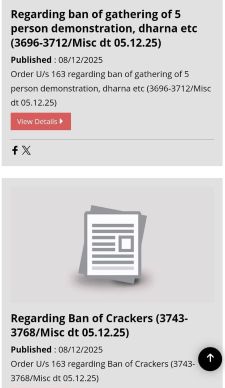
Many orders invoke Section 163 despite High Court caution.
This law exists only for situations involving urgent danger or serious threat to public order. The High Court explicitly warned that such powers cannot become tools of routine governance. They require speaking orders, demonstrable urgency, and clear justification.
Which leads to an obvious question Punjab must now ask:
How many of these orders are genuinely emergency-driven — and how many simply reflect administrative convenience wrapped in extraordinary powers? And more importantly, on how many of these orders did the ADM truly “apply her mind,” as directed — and how many were issued in a mechanical, template-like manner?
Transparency Claims Collapse in Practice
If the legal issue raises constitutional eyebrows, the transparency experience raises democratic alarm bells.
Punjab Today sought a copy of the 5 December 2025 order banning gutka, pan masala and similar products — a public document that should not only have been readily available but, as per its own language, should have been prominently displayed on public notice boards.
Instead, the system behaved as if it was guarding a classified file.

Patiala admin site
From the ADM’s office to the MA branch, officials simply failed — and in some cases refused — to provide the order. Some expressed ignorance. Some appeared evasive. Shockingly, some even suggested Punjab Today should file an RTI application — for a document the administration itself claims is public and “available”.
The irony deepens.
When the matter was personally raised before the ADM Patiala, the response wasn’t facilitation — it was deflection:
“Search it on the official website.”
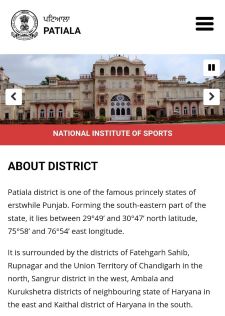
Official portal
But the district website lists multiple Section 163 orders dated 4 and 5 December on various subjects — yet this critical order is conspicuously absent.
How does a government justify withholding public orders that directly impact livelihoods, businesses, enforcement actions and civil liberties?
How does an administration claim transparency while forcing citizens and journalists to file RTIs for something that should already be publicly displayed?
Governance Credibility Is the Real Casualty
This is no longer merely about a missing order.
It is about mindset.
The High Court cautioned against mechanical use — yet Patiala produced a near assembly-line of Section 163 orders.
The law mandates publicity — yet citizens are made to beg for basic access.
Orders demand display — yet the administration hides them.
The judiciary insists on restraint — but the executive presses ahead.
If journalists, whose job is to inform the public, struggle to access a government order that should already be available in the public domain, what hope does an ordinary citizen have in dealing with such administrative opacity?
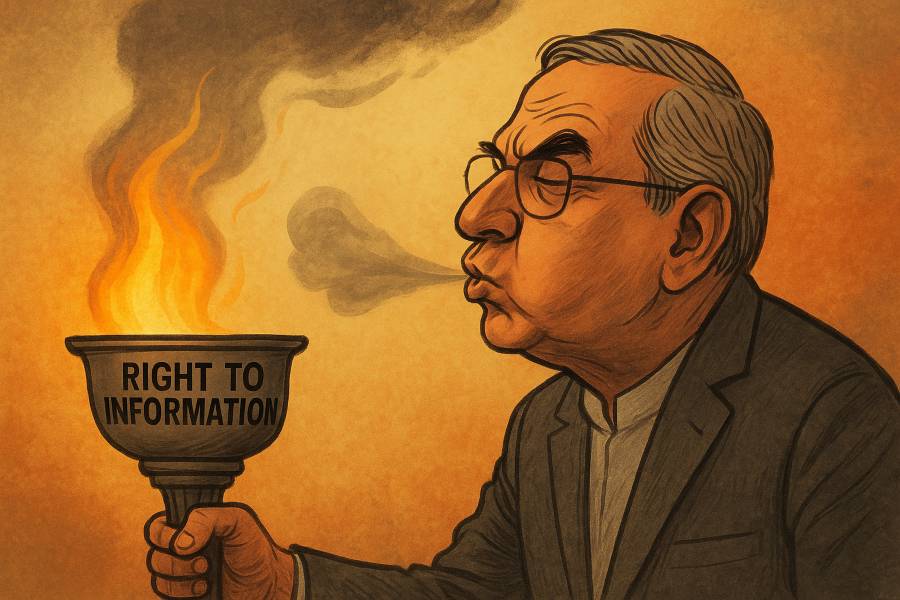 And if the administration expects a news organisation to file an RTI for something meant to be publicly displayed, what does a farmer, a shopkeeper, a student, a social activist — or any citizen — do when faced with these restrictions and prohibitory orders issued despite High Court guidance on Section 163 BNSS?
The High Court’s caution was not theoretical. It was a constitutional reminder that extraordinary power without accountability corrodes democracy. Patiala ADM’s conduct has now turned that judicial reminder into a very real governance question.
Also Read: When Justice Itself Awaits Justice
Until the administration explains why so many Section 163 orders were issued immediately after the Court’s warning — and why a key public order was withheld from public access — one unsettling doubt remains:
Is Section 163 being used for genuine emergencies… or has it quietly become a convenient weapon of unchecked authority?
Punjab Today will continue to pursue the missing gutka and pan masala ban order and will publish a detailed analysis as soon as the document is obtained.
Team PT is currently reviewing the legality of every Section 163 BNSS order issued by the Patiala ADM following the High Court’s warning. We aim to determine whether the administration is upholding the judicial mandate of ‘due care and caution’ — or merely bypassing it.
Also Read: Silencing Journalism: Pressure Tactics and Law
Note: Punjab Today reached out to the Patiala ADM’s office via email and telephone for comment on the surge of Section 163 orders and the lack of public access to the December 5 order. As of the time of publication, no response has been received. This report will be updated should the administration provide a statement. 
_________
Also Read:
Complaint Against Lawyers? Pay ₹6,500 First, Says Bar Council of Punjab & Haryana
Are Bombay High Court Officials Unaware of Amended Court-Fee Law?

Team PT
punjabtodaynews@gmail.com
Disclaimer : PunjabTodayNews.com and other platforms of the Punjab Today group strive to include views and opinions from across the entire spectrum, but by no means do we agree with everything we publish. Our efforts and editorial choices consistently underscore our authors’ right to the freedom of speech. However, it should be clear to all readers that individual authors are responsible for the information, ideas or opinions in their articles, and very often, these do not reflect the views of PunjabTodayNews.com or other platforms of the group. Punjab Today does not assume any responsibility or liability for the views of authors whose work appears here.
Punjab Today believes in serious, engaging, narrative journalism at a time when mainstream media houses seem to have given up on long-form writing and news television has blurred or altogether erased the lines between news and slapstick entertainment. We at Punjab Today believe that readers such as yourself appreciate cerebral journalism, and would like you to hold us against the best international industry standards. Brickbats are welcome even more than bouquets, though an occasional pat on the back is always encouraging. Good journalism can be a lifeline in these uncertain times worldwide. You can support us in myriad ways. To begin with, by spreading word about us and forwarding this reportage. Stay engaged.
— Team PT