


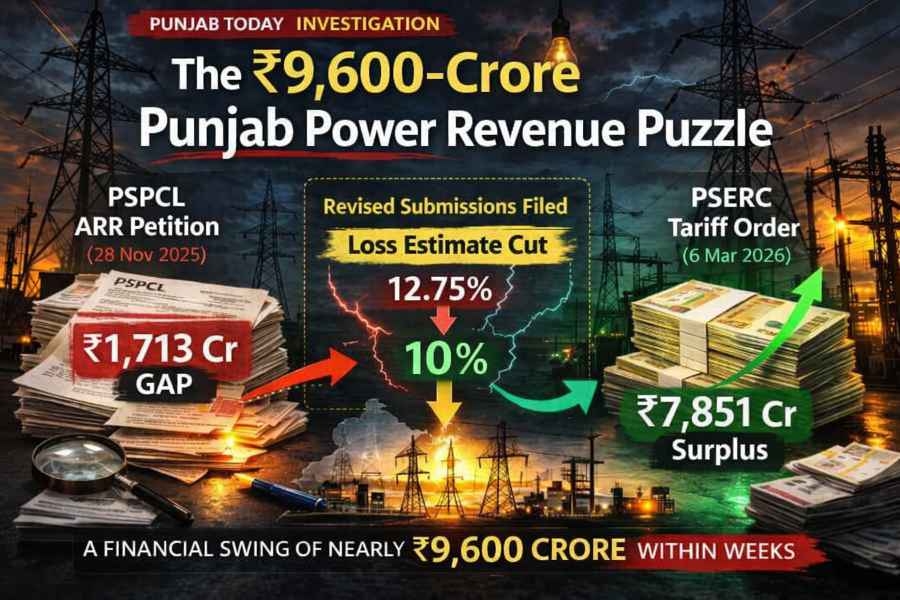
Documents show how revised loss estimates and accounting changes altered PSPCL’s finances during the FY 2026-27 tariff proceedings.
SOMETIMES THE MOST striking magic tricks are performed not on stage but inside official documents.
Punjab’s latest electricity tariff order has produced an extraordinary financial puzzle.
In documents filed before the Punjab State Electricity Regulatory Commission (PSERC), the state power utility Punjab State Power Corporation Limited (PSPCL) projected a cumulative revenue gap of ₹1,713 crore in its tariff petition submitted on 28 November 2025.
Yet within weeks, the same tariff proceedings ended with the Commission determining a cumulative regulatory surplus of ₹7,851.91 crore.
The shift represents a financial swing of nearly ₹9,600 crore.
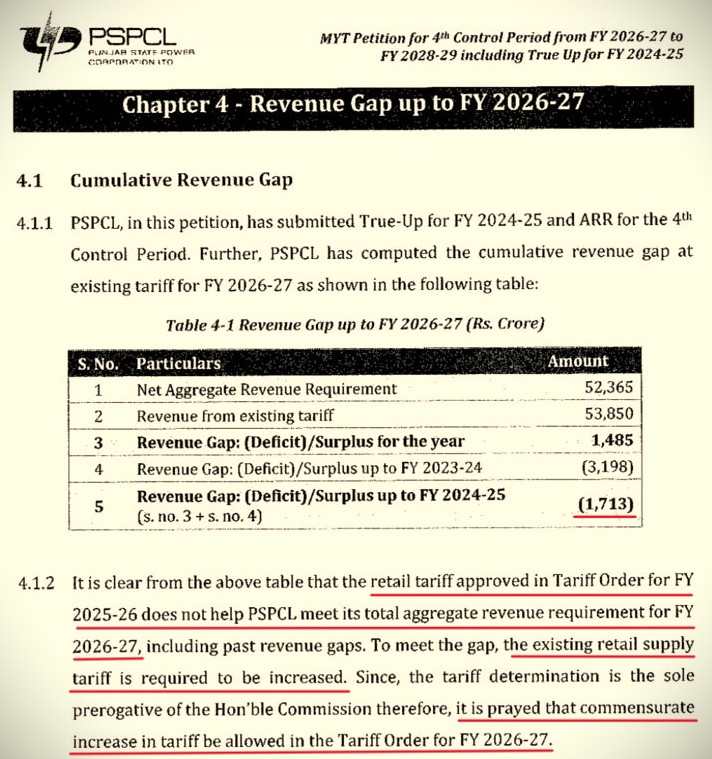
PSPCL’s tariff petition submitted to PSERC showed a cumulative revenue gap of ₹1,713 crore.
What makes the turnaround striking is that it did not emerge after years of operational improvement. Instead, it appeared during the tariff proceedings themselves, through revised submissions, altered assumptions and recalculated financial projections.
One of the most significant changes involved distribution loss estimates. In its original petition, PSPCL projected losses of 12.75 percent for FY 2026–27. In revised submissions filed later during the proceedings, the utility indicated that losses could fall to 10 percent.
Such a reduction may appear modest on paper. But in a power system handling tens of thousands of million units of electricity annually, even a one-percent change in loss assumptions can alter financial outcomes by thousands of crores.
The revised numbers dramatically changed the financial picture of the utility.
How this happened raises important questions about the tariff determination process.
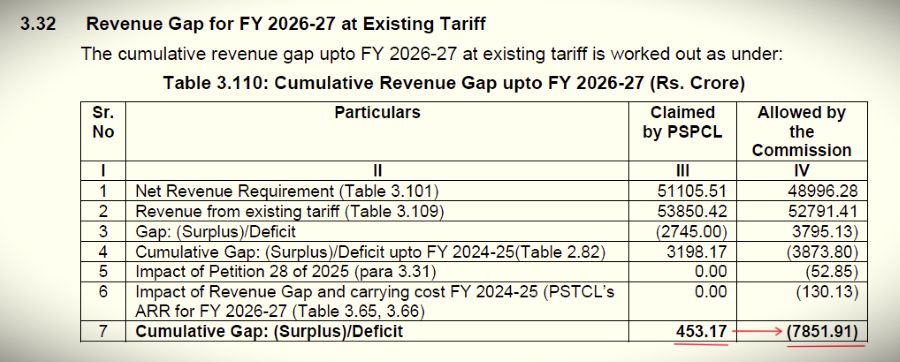
PSERC’s final tariff order converted the projected deficit into a ₹7,851 crore surplus.
PSPCL first filed a detailed Aggregate Revenue Requirement (ARR) petition running hundreds of pages. Then, after public objections had already been submitted, the utility filed additional submissions revising key financial assumptions used in the original petition.
PSERC admitted the revised submissions and proceeded to determine tariffs on the basis of the updated numbers.
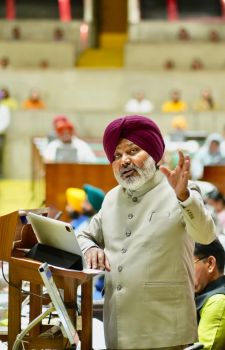
FM Harpal Singh Cheema presenting the Budget.
The timing added another layer to the puzzle. The Commission — which usually announces tariff orders toward the end of March — issued the order on 6 March, just before the presentation of the Punjab state budget.
The result was a tariff order that not only reduced electricity rates for several categories of consumers but also showed the state power utility moving from deficit to surplus.
Whether this dramatic turnaround reflects genuine improvements in the power sector — or merely revised assumptions in regulatory calculations — is a question that deserves closer examination.
In regulatory proceedings involving thousands of crores, even small changes in assumptions can dramatically alter the financial outcome.
What Changed Between the Petition and the Final Order?
A comparison of the original ARR petition, the revised submissions and the final tariff order shows that several key assumptions changed during the proceedings. Together, these revisions transformed PSPCL’s projected financial position from a deficit to a regulatory surplus.
Revenue Gap Calculation
In the ARR petition filed on 28 November 2025, PSPCL reported a cumulative revenue gap of ₹1,713 crore after adjusting earlier deficits.

However, after revised submissions were admitted during the proceedings, the financial position changed significantly.
In the final tariff order, PSERC determined a cumulative surplus of ₹7,851.91 crore.
The difference between the two positions represents a financial swing of nearly ₹9,600 crore.
Treatment of Government Loss Funding
Another important factor relates to financial support provided by the Punjab government.
PSPCL had received ₹3,581.95 crore as loss funding from the state government.
In the original petition this amount had not been treated as non-tariff income. However, in revised submissions during the proceedings the utility sought to include it under non-tariff income, which reduces the revenue requirement that needs to be recovered through tariffs.
Changes in the accounting treatment of such large sums can significantly alter the final revenue gap calculation.
Net ARR Requirement
The revised calculations also altered the overall Aggregate Revenue Requirement (ARR).
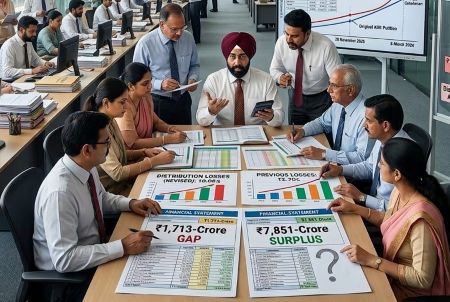
According to the tariff order, the net ARR determined by PSERC was ₹48,996.28 crore, while the revenue expected from existing tariffs was ₹52,791.41 crore.
This resulted in an annual surplus of ₹3,795.13 crore, which contributed to the cumulative surplus determined by the Commission.
Taken together, these revisions changed the financial narrative of the tariff proceedings.
Among all the revisions introduced during the proceedings, one change stands out for its scale.
The “Impossible” Loss Reduction
One of the most striking developments in the tariff proceedings was the sudden revision of distribution loss assumptions.
In its original ARR petition, PSPCL projected distribution losses of 12.75 percent for FY 2026–27. During the proceedings this figure was revised downward to 10 percent.
This represents a reduction of 2.75 percentage points in a single year.
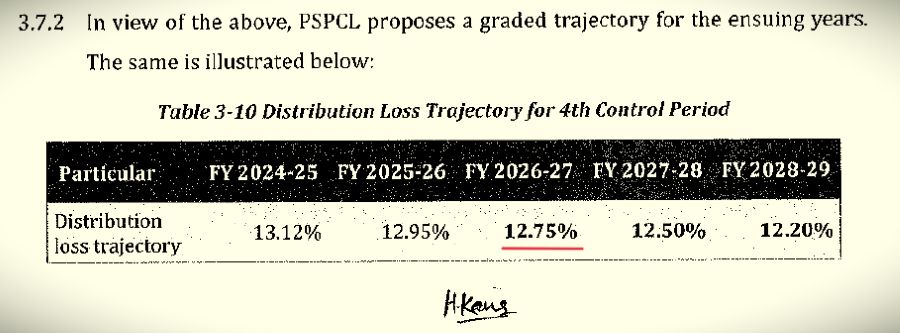
PSPCL originally projected distribution losses at 12.75% for FY 2026-27.
Distribution losses directly determine how much electricity must be procured to meet consumer demand. When assumed losses decline, projected energy procurement falls, power purchase costs decline and the overall revenue requirement reduces.
Loss reduction, however, is not something that typically happens overnight.
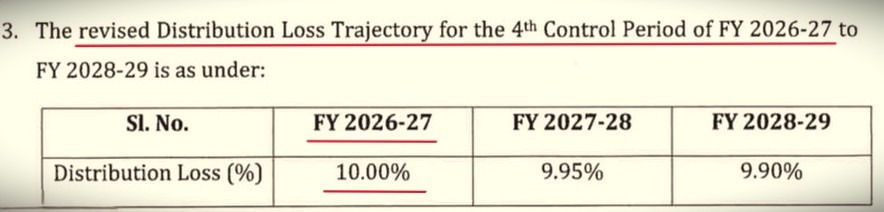
Revised submissions reduced the distribution loss estimate to 10%.
It usually requires sustained operational improvements such as feeder segregation, transformer upgrades, smart metering and anti-theft enforcement — changes that typically take years, not weeks.
The sudden revision therefore raises a regulatory question: how was such a deviation from the approved loss trajectory accepted during the tariff proceedings?
Once the revised loss assumption was accepted, the downstream financial calculations changed dramatically.
Lower losses reduced projected energy procurement and power purchase costs, contributing significantly to the ₹7,851.91-crore surplus determined by the Commission.
How the Subsidy Burden Fell
The tariff order also recalculated the subsidy payable by the Punjab government.
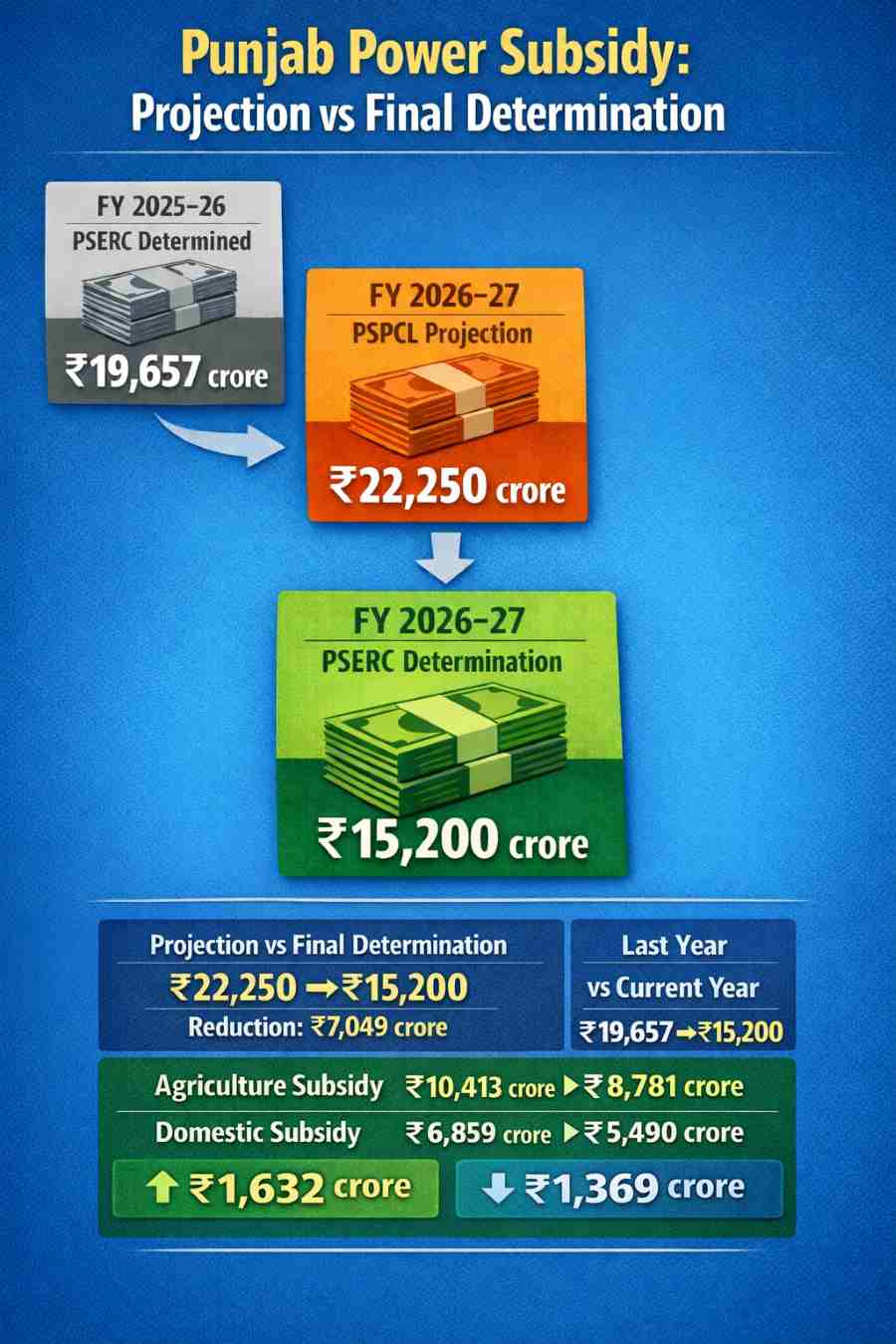
For FY 2026–27, PSERC determined the total subsidy requirement at ₹15,200.55 crore. This subsidy is paid by the Government of Punjab to compensate the power utility for supplying electricity at subsidised tariffs to certain consumer categories.
The largest component relates to agricultural power consumption, which accounts for ₹8,781.77 crore. Another major component is the free electricity scheme for domestic consumers, which amounts to ₹5,490.86 crore.
Electricity tariffs in Punjab are closely linked to government subsidies. The subsidy represents the difference between the tariff determined by the regulator and the subsidised tariff charged to consumers.
The reduction is also visible in the two largest subsidy categories.
Agriculture subsidy declined from ₹10,413.14 crore in FY 2025–26 to ₹8,781.77 crore in the latest tariff order.
Similarly, domestic subsidy declined from ₹6,859.93 crore to ₹5,490.86 crore.
Because electricity subsidies represent one of the largest expenditures in Punjab’s annual budget, revisions in tariff calculations can significantly alter the subsidy burden reflected in the state’s fiscal estimates.
The Consultation Question
Another procedural issue relates to stakeholder consultation.
After admitting revised submissions, PSERC reportedly allowed only a limited window (5 days) for objections. Since these revised filings altered key financial assumptions used in tariff calculations, stakeholders had limited time to analyse the new numbers.
Many objections filed earlier in the consultation process were based on the original petition rather than the revised assumptions.
This raises questions about whether stakeholders had sufficient opportunity to examine the revised calculations before the tariff order was issued.
The Budget Timing Question
Another unusual aspect of the proceedings was the timing of the tariff order.
In the previous year, the tariff order for FY 2025–26 was issued on 28 March 2025. This year, however, the order for FY 2026–27 was issued on 6 March, nearly three weeks earlier than usual and just before the presentation of the Punjab state budget.
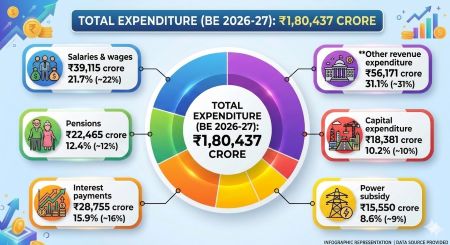
Punjab Budget 2026-27 outlines major expenditure priorities including power subsidy.
Electricity subsidies form one of the largest expenditures in the state budget. Because subsidy payments depend directly on tariff calculations, changes in tariff assumptions can influence the subsidy burden reflected in the budget.
The sequence of events therefore raises an obvious question.
If tariff calculations affect the subsidy burden reflected in the budget, did the government already know the likely outcome of the tariff determination while preparing the state budget?
Normally, regulatory decisions are expected to remain independent of fiscal planning. But when tariff orders are issued unusually early — and just before the state budget — the overlap between regulatory decisions and budgetary calculations becomes difficult to ignore.
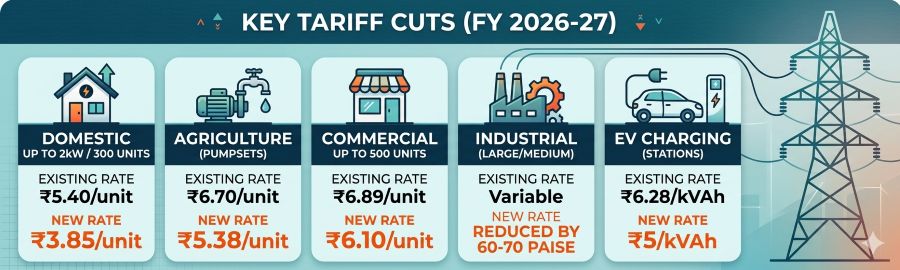
Electricity tariffs affect millions of households, farmers and businesses across Punjab.
When key financial assumptions change dramatically during regulatory proceedings, transparency becomes essential.
Because the central puzzle remains unresolved:
How this ₹9,600-crore swing emerged during the tariff proceedings remains a question that deserves closer scrutiny. 
Part 2 of this investigation will examine the political questions raised about the tariff order and the broader implications for Punjab’s power sector.
Note: Figures cited in this report are based on tariff orders and subsidy tables published by the Punjab State Electricity Regulatory Commission. Punjab Today sent queries to Punjab State Power Corporation Limited and the Punjab State Electricity Regulatory Commission seeking clarification on these issues. Their response was awaited at the time of publication.

kanwar manjit singh
Kanwar Manjit Singh, Founder Editor of Punjab Today, writes extensively on Punjab’s history, governance, and the evolving landscape of civil liberties in India.
Disclaimer : PunjabTodayNews.com and other platforms of the Punjab Today group strive to include views and opinions from across the entire spectrum, but by no means do we agree with everything we publish. Our efforts and editorial choices consistently underscore our authors’ right to the freedom of speech. However, it should be clear to all readers that individual authors are responsible for the information, ideas or opinions in their articles, and very often, these do not reflect the views of PunjabTodayNews.com or other platforms of the group. Punjab Today does not assume any responsibility or liability for the views of authors whose work appears here.
Punjab Today believes in serious, engaging, narrative journalism at a time when mainstream media houses seem to have given up on long-form writing and news television has blurred or altogether erased the lines between news and slapstick entertainment. We at Punjab Today believe that readers such as yourself appreciate cerebral journalism, and would like you to hold us against the best international industry standards. Brickbats are welcome even more than bouquets, though an occasional pat on the back is always encouraging. Good journalism can be a lifeline in these uncertain times worldwide. You can support us in myriad ways. To begin with, by spreading word about us and forwarding this reportage. Stay engaged.
— Team PT