


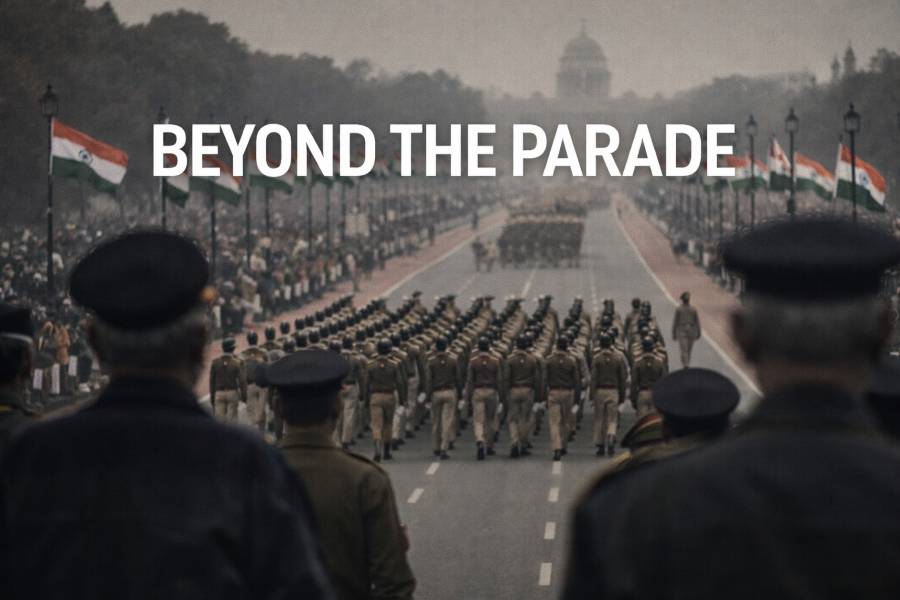
Republic Day is a reminder that democracy survives not on spectacle, but on constitutional discipline, accountability, and conscience.
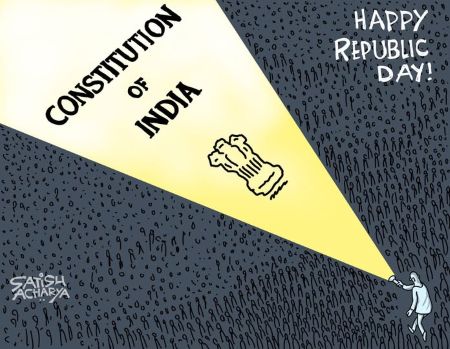
EVERY YEAR ON 26 January, India marks Republic Day with parades, pageantry, and patriotic display. The occasion is solemn, the symbolism powerful. Yet the Republic of India was never meant to be remembered only through spectacle. It was meant to be lived daily through the Constitution.
Republic Day commemorates not a military triumph or a political milestone, but the moment India chose to govern itself by the rule of law, placing the Constitution above individuals, offices, and institutions. This distinction is vital — and increasingly relevant — in contemporary times.
The Constitution, Not the Ceremony
On 26 January 1950, India adopted a Constitution that deliberately restrained power. It established that authority would flow from law, not from position; that rights would be guaranteed, not granted; and that accountability would be fundamental, not optional.

Republic Day is therefore not about ceremonial affirmation alone. It is about reaffirming constitutional supremacy — the principle that no authority operates beyond legal limits.
When procedures are diluted, safeguards bypassed, or accountability treated as inconvenience, the Republic weakens quietly, even as celebrations continue undisturbed. A republic survives not on appearances, but on adherence.
Institutions and the Everyday Republic
A functioning republic depends on institutions that respect due process, transparency, and neutrality. Courts, administrators, investigative bodies, and regulators are not merely offices of power; they are trustees of constitutional faith.
The Republic of India was never meant to be remembered only through spectacle. It was meant to be lived daily through the Constitution.
In recent years, many citizens have increasingly found themselves seeking judicial remedies for protections that should have been routine.
Administrative actions taken without transparent procedure, prolonged uncertainty in legal processes, and selective enforcement of rules have raised persistent — though often understated — concerns about institutional accountability.
These are not abstract anxieties. They are lived experiences. A republic does not erode through open defiance of the Constitution, but through incremental departures from its spirit, normalised over time.
Republic Day must therefore prompt honest reflection on how institutions function between ceremonies.
Citizenship Beyond Symbols
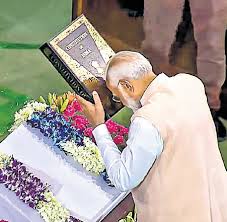
Patriotism in a republic is not measured by slogans or symbolism alone. Citizenship carries responsibilities — awareness, vigilance, and the willingness to question authority when it exceeds constitutional bounds.
The Constitution recognises rights as inherent, not conditional. Equality before law, freedom of expression, and protection of life and liberty are enforceable guarantees, not ornamental ideals.
When citizens must repeatedly struggle to assert these rights, the Republic’s promise appears distant, regardless of ceremonial pride.
Republic Day reminds us that democracy is sustained not by uniform agreement, but by lawful dissent, constitutional remedies, and informed participation.
Patriotism, Reality, and Uncomfortable Questions
We often quote Allama Iqbal’s famous couplet with pride:
सारे जहाँ से अच्छा हिन्दोस्ताँ हमारा
हम बुलबुलें हैं इस की ये गुलसिताँ हमारा
Saare jahaan se achchha Hindostaan hamaara
Hum bulbulein hain is ki yeh gulsitaan hamaara
But Republic Day also demands an honest question: do we still believe this in practice, or only in poetry?
A growing number of young Indians are choosing to build their futures elsewhere — not out of disloyalty, but out of disillusionment. When opportunity, security, and dignity appear more attainable abroad, migration becomes a referendum on domestic realities.
Patriotism cannot survive on sentiment alone; it must be sustained by fairness, opportunity, and hope at home.
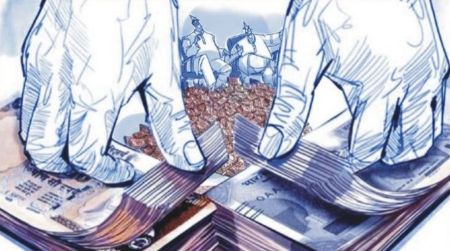 Income inequality, once a muted concern, is now stark and visible. When a small fraction controls a disproportionate share of economic wealth, the promise of equal opportunity begins to ring hollow. Economic growth loses meaning if its benefits bypass the many while accumulating with the few.
Equally troubling is the corrosion of public trust. Corruption no longer shocks; it is often anticipated. Campaigns fought on promises of integrity frequently dissolve into carefully structured methods of exchequer depletion once power is secured. The normalisation of dishonesty inflicts lasting damage on democratic faith.
The media, traditionally the watchdog of the Republic, faces its own crisis of credibility. Sections of the press have lost their sheen as protectors of public interest, increasingly perceived as shields for vested interests rather than voices for citizens.
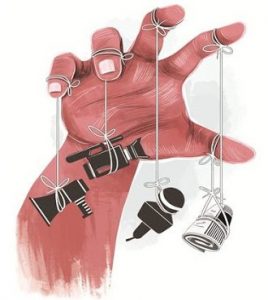
When journalism becomes transactional, truth becomes negotiable — and democracy weaker.
Governance too suffers when policy announcements are treated as spectacle rather than substance. Schemes are unveiled without transparent assessment of fiscal viability or infrastructural readiness, and are amplified without rigorous questioning.
Also Read: Press Freedom Is Not a Shield for Business Interests
A republic requires scrutiny — not applause — especially when public resources and long-term consequences are involved.
Unity Without Uniformity
The Indian Republic was consciously designed as a plural democracy. Its unity was never meant to arise from sameness of language, religion, or region, but from equal protection under law.
Communal harmony is not maintained by slogans alone. It is sustained when institutions remain neutral, when diversity is respected, and when citizenship carries equal dignity.
A republic fractures when any group feels reduced to a lesser claim on justice or protection.
True national unity is achieved not by erasing differences, but by ensuring differences never become grounds for discrimination or exclusion.
We Must Remember
The Republic of India was not created to be performed once a year. It was created to function every day — in offices and courtrooms, in governance and dissent, in diversity and disagreement.

On this 26 January, the Republic calls for more than celebration. It calls for fidelity — to constitutional limits on power, to accountability in institutions, and to harmony across language, religion, and region.
The Constitution remains the Republic’s conscience. Upholding it is not symbolic duty; it is democratic survival.
Republic Day reminds us that love for the nation and fidelity to conscience are not opposites.
Josh Malsiyani expressed this truth with rare moral clarity:
वतन की सर-ज़मीं से इश्क़-ओ-उल्फ़त हम भी रखते हैं
खटकती जो रहे दिल में वो हसरत हम भी रखते हैं
बला से हो अगर सारा जहाँ उनकी हिमायत पर
ख़ुदा-ए-हर-दो-आलम की हिमायत हम भी रखते हैं
Watan ki sar-zameen se ishq-o-ulfat hum bhi rakhte hain
Khatakti jo rahe dil mein woh hasrat hum bhi rakhte hain
Bala se ho agar saara jahaan unki himaayat par
Khuda-e-har-do-aalam ki himaayat hum bhi rakhte hain
— Josh Malsiyani 
__________
Also Read:
JAN 21 – when US Supreme Court opened billion-dollar road for the ilk of Trump in politics

Punjab Today
punjabtodaynews@gmail.com
Disclaimer : PunjabTodayNews.com and other platforms of the Punjab Today group strive to include views and opinions from across the entire spectrum, but by no means do we agree with everything we publish. Our efforts and editorial choices consistently underscore our authors’ right to the freedom of speech. However, it should be clear to all readers that individual authors are responsible for the information, ideas or opinions in their articles, and very often, these do not reflect the views of PunjabTodayNews.com or other platforms of the group. Punjab Today does not assume any responsibility or liability for the views of authors whose work appears here.
Punjab Today believes in serious, engaging, narrative journalism at a time when mainstream media houses seem to have given up on long-form writing and news television has blurred or altogether erased the lines between news and slapstick entertainment. We at Punjab Today believe that readers such as yourself appreciate cerebral journalism, and would like you to hold us against the best international industry standards. Brickbats are welcome even more than bouquets, though an occasional pat on the back is always encouraging. Good journalism can be a lifeline in these uncertain times worldwide. You can support us in myriad ways. To begin with, by spreading word about us and forwarding this reportage. Stay engaged.
— Team PT