


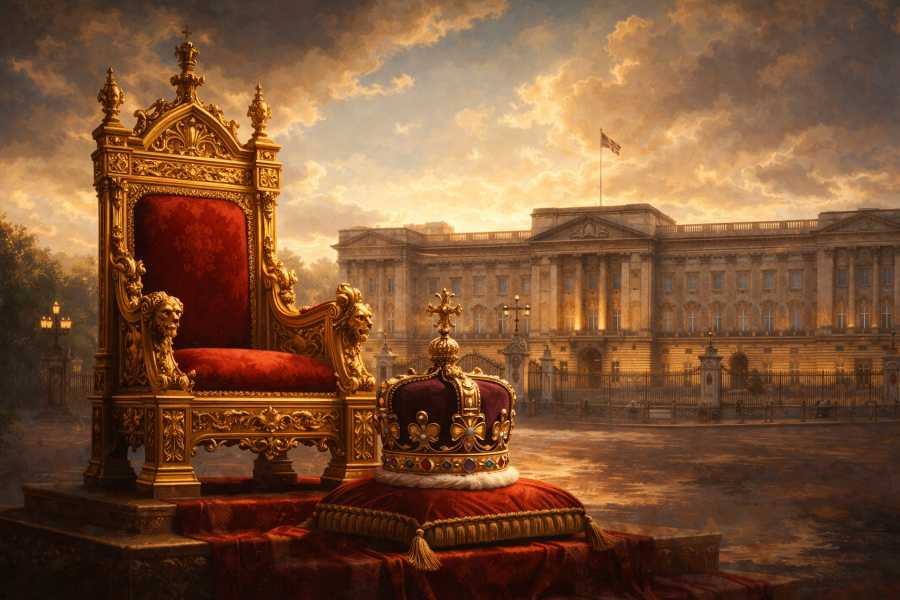
From tradition to accountability, Britain confronts an uncomfortable constitutional question.
MANY VOICES ARE being heard in the United Kingdom, after the recent developments relating to Prince Andrew (now Mr Andrew Mountbatten Windsor) and his despicable and degenerate friends Jeffrey Epstein and Ghislaine Maxwell, that the UK should be made a Republic.
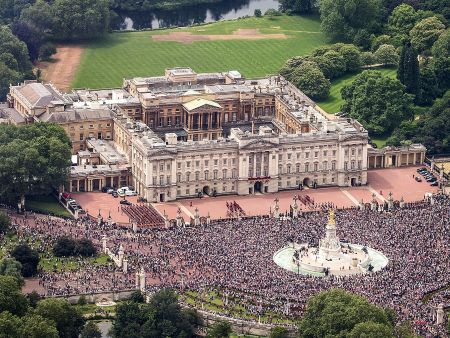
Buckingham Palace, the official London residence of the British monarch.
The debate over the future of the British monarchy is not new, but recent controversies have revived it with renewed intensity. Questions are increasingly being asked about whether hereditary privilege can coexist with modern democratic values.
Across Britain, intellectuals, commentators, activists, and ordinary citizens are engaging in discussions about constitutional reform and the desirability of replacing monarchy with an elected head of state.
One of the main figures advocating abolishing the monarchy is Graham Smith, CEO of the organization ‘Republic’. Many others are also of the same opinion. The republican movement argues that democracy must ultimately rest on equality of citizenship, and that no public office — even a symbolic one — should be determined by birth rather than merit or public choice.
A Renewed Republican Question
Monarchy is a feudal institution, which is totally outdated and anachronistic in the modern age. Then why is it being continued even today in UK, which is a modern, industrialized country, and claims to be a democracy?
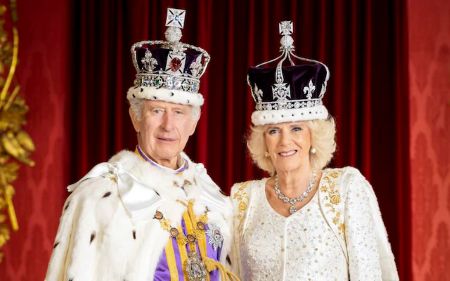
King Charles III and Queen Camilla during a royal ceremony.
This question strikes at the heart of constitutional theory. Democracies are founded on the principle that sovereignty lies with the people. Yet monarchy represents continuity of hereditary hierarchy, a remnant of medieval political structures.
Supporters of monarchy often invoke tradition, stability, and national identity, but critics argue that tradition alone cannot justify institutional inequality in a society that otherwise claims adherence to democratic ideals.
Monarchy in a Modern Democracy
It is estimated that about 107 million pounds every year are spent by the British government on the royal family, and this money comes from the taxpayer’s hard earned income. Apart from that, the royal family has huge landholdings, castles, mansions, jewellery, and other assets.
At a time when economic pressures, rising living costs, and widening inequality affect ordinary citizens, public expenditure on hereditary institutions has become a matter of increasing scrutiny. Critics contend that democratic accountability requires justification for every use of public funds, particularly when such expenditure sustains lifestyles rooted in inherited privilege rather than public service.
The ‘royals’ do no productive work, unless it can be said that mere existing, or living off the labour of other people, is productive work.

Buckingham Palace and the Victoria Memorial in London.
Yet they live lives of great luxury, in huge palaces with hundreds of employees catering to their every need, eat the best food, fly to foreign countries or islands (like Little St James Island owned by the notorious Jeffrey Epstein) on jets, paid by the government by taxing the people, where they often do debauchery with young girls, etc.
They are like drones who do no work, or parasites (like Bertie Wooster in P.G. Wodehouse’s stories), or like vampires who suck the people’s blood (by living off the people’s money).
They pay no taxes on their huge unearned incomes (whereas the common people are heavily taxed), like the French aristocrats before the French Revolution of 1789, many of whom were guillotined in the Revolution.
History repeatedly demonstrates that institutions perceived as unjust or excessively privileged eventually face public resistance. Political legitimacy depends not merely on continuity but on moral acceptance by society. When citizens begin to question fairness, even long-standing institutions become vulnerable to change.
Privilege, Wealth and Public Accountability
Their private lives, which are often scandalous, lecherous, and full of debauchery, like the lives of Andrew (who had sex with minor girls supplied to him by Jeffrey Epstein and Ghislaine Maxwell), Princess Margaret, Sarah Ferguson, King George VII, etc., are usually shrouded in mystery and secrecy, and cover-up techniques are employed by the royal family in hiding them (as the late Queen Elizabeth II and the present King Charles reportedly did in protecting the corrupt and depraved ex-Prince Andrew for long).

Andrew
So there is little transparency and accountability in the behaviour of the royal family. How is this acceptable in a democracy and in the modern age?
Transparency and accountability are the foundations of democratic governance. Public officials, judges, ministers, and civil servants are subject to scrutiny, criticism, and legal responsibility. Critics therefore ask why hereditary institutions should remain insulated from similar standards. In a democratic ethos, legitimacy flows from accountability, not lineage.
Changing Public Opinion and the Future of the Crown
While a majority of Britishers still want retention of the monarchy, this majority is rapidly dwindling, and is at a historical low, while the number of those wanting its abolition has grown rapidly in recent years, and is nearing the halfway mark.
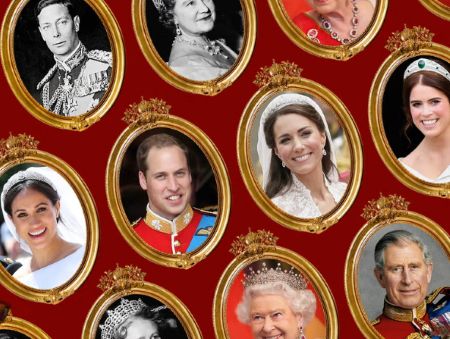
The British royal family across generations.
Generational change appears to be playing an important role in this shift. Younger citizens, raised in an era emphasizing equality, transparency, and meritocracy, increasingly question inherited privilege. Public debate has therefore moved from the margins into mainstream political discourse, suggesting that constitutional transformation, once unthinkable, is now openly discussed.
It is almost certain that the British monarchy will be abolished in the coming years, and the UK will then become a UR (United Republic). It is time for Britishers to get rid of these parasites and leeches who have been living off their blood for long.
Also Read:
The Billionaire Republic: When Wealth Concentrates, Democracy Contracts
The future of the British constitutional system will ultimately depend on the will of its people. Whether reform comes gradually through democratic debate or through a decisive political moment remains to be seen. What is clear, however, is that the question of monarchy versus republic is no longer theoretical; it has become a living issue within British public life and democratic consciousness. 
____________
Also Read:
Kejriwal’s Tearful Vindication Gives AAP Moral Oxygen in Punjab
Turban, Throne and Theatre: The Absurd Revival of Royal Rituals in a Democracy

Markandey Katju
Justice Markandey Katju is former Judge, Supreme Court of India and former Chairman, Press Council of India.
Disclaimer : PunjabTodayNews.com and other platforms of the Punjab Today group strive to include views and opinions from across the entire spectrum, but by no means do we agree with everything we publish. Our efforts and editorial choices consistently underscore our authors’ right to the freedom of speech. However, it should be clear to all readers that individual authors are responsible for the information, ideas or opinions in their articles, and very often, these do not reflect the views of PunjabTodayNews.com or other platforms of the group. Punjab Today does not assume any responsibility or liability for the views of authors whose work appears here.
Punjab Today believes in serious, engaging, narrative journalism at a time when mainstream media houses seem to have given up on long-form writing and news television has blurred or altogether erased the lines between news and slapstick entertainment. We at Punjab Today believe that readers such as yourself appreciate cerebral journalism, and would like you to hold us against the best international industry standards. Brickbats are welcome even more than bouquets, though an occasional pat on the back is always encouraging. Good journalism can be a lifeline in these uncertain times worldwide. You can support us in myriad ways. To begin with, by spreading word about us and forwarding this reportage. Stay engaged.
— Team PT