


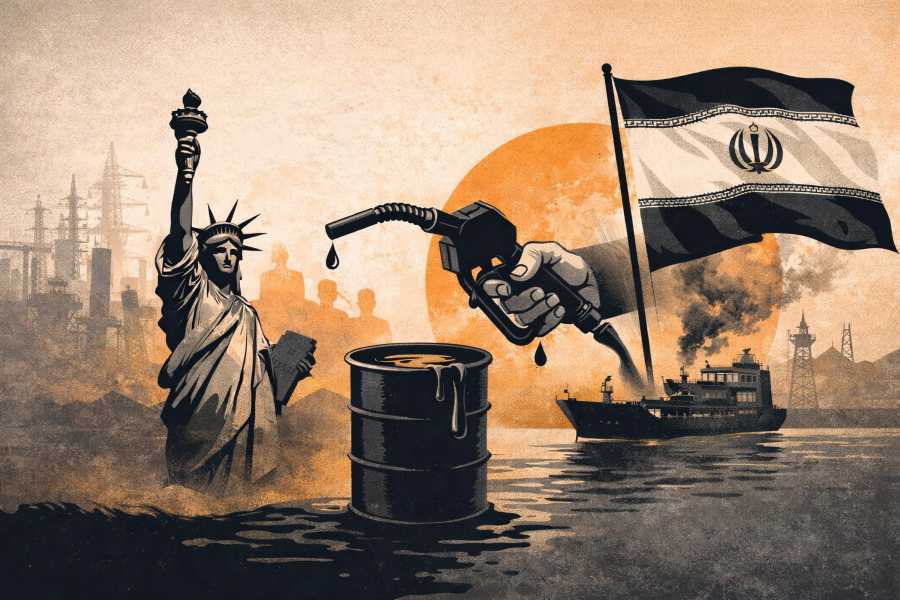
Trump’s sanction relief to cool oil prices may ease global supply pressures while giving India a strategic edge.
THE DECISION LAST WEEK by the United States to temporarily ease sanctions on Iranian oil shipments already at sea sparked immediate reactions on social media.
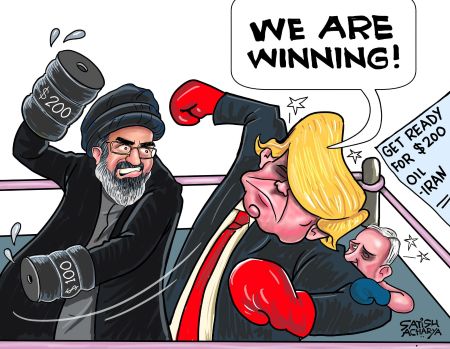
Apparently, the hasty American move is being viewed by experts as an attempt to cool surging global energy prices amid the ongoing West Asia conflict. However, in the current scenario, India stands to benefit from this move, as it may ease pressure on the domestic demand side.
The US decision to temporarily ease sanctions on Iranian oil shipments already at sea sparked online reactions. Iran’s Parliament Speaker Mohammad Bagher Ghalibaf mocked the move on X, writing: “Lifting sanctions on Iranian oil currently stranded at sea? Sorry—we’re sold out.”
Iranian oil in global spotlight
Treasury Secretary Scott Bessent on Friday (March 20) framed the move as “using the Iranian barrels against Tehran to keep the price down as we continue Operation Epic Fury.”
“Iran will have difficulty accessing any revenue generated, and the United States will continue to maintain maximum pressure on Iran and its ability to access the international financial system,” he wrote on X.
Highlighting the rationale behind the decision, Bessent noted that the measure would help ease supply pressures.
According to CNN, the 30-day waiver could bring about 140 million barrels of oil into global markets. Oil prices have climbed roughly 50% to more than $100 a barrel—their highest level since 2022—raising concerns in the White House about the impact on businesses and consumers ahead of the November midterm elections.
Bessent said the temporary measure could help stabilise supply and reduce price pressures. In a statement posted on X, he said the US was “temporarily unlocking this existing supply for the world” to counter disruptions linked to the conflict.
The licence also states that Iranian oil could be imported into the United States if necessary to complete sales or deliveries, though it remains unclear whether any shipments will actually reach US ports. Regions such as Cuba, North Korea, and Crimea are excluded from the licence, reports CNN.
The Rationale Behind the US Decision
However, the optics of the American decision are rather discomfiting. Though the US’s avowed aim is to decimate the Iranian regime militarily, this move may allow the Iranian regime to benefit financially.
It presents a unique paradox—helping your adversary economically while attempting to weaken it strategically, and simultaneously creating complications for another rival, i.e., China.
Trump’s oil strategy under scrutiny
Further, it is also a tacit acknowledgement of the intense economic and political pressure that Iran has exerted on the US by closing the Strait of Hormuz.
Reportedly, American officials warmed to the idea in recent days, arguing that this oil would have eventually been purchased by China despite US sanctions. Instead, US allies could buy it, easing their immediate supply concerns at only a slightly higher price than China would have otherwise paid.
As for President Donald Trump, the dynamics are particularly awkward. After repeatedly criticising former President Barack Obama for sending cash to Iran as part of the nuclear deal, Trump is now effectively encouraging Iran to step up its oil sales.
Further, this move may increase competition for Iranian barrels among other countries and China. While it could lead to the end of discounts on Iranian oil, importing countries would still remain keen buyers, as in the current scenario supply security is being prioritised over price considerations.
A Boon for India
The US move could help Indian refiners capitalise on the opportunity, much like they did by ramping up imports of Russian crude in recent weeks. Amid tight global supply, every barrel counts.
Around 2.5–2.7 million barrels per day (bpd) of India’s crude imports—roughly half of total imports—have transited through the Strait of Hormuz in recent months, compared to a longer-term average of around 40%.
India depends on imports to meet over 88% of its crude oil requirements. Globally, around 20 million barrels per day typically pass through the Strait of Hormuz.
India eyes gains from shifting oil flows
India has not imported oil from Iran since May 2019, following the expiration of US sanctions waivers granted to major buyers. Non-compliance with American sanctions would have exposed Indian oil companies to secondary sanctions from Washington.
Prior to that, India had been a regular buyer of Iranian oil—even during earlier sanction periods—when import volumes declined but remained significant.
Apparently, this move can be seen as a calculated strategy by the Trump administration—killing not two, but several birds with one stone.
Firstly, the general licence allows some Iranian oil to be sold to American companies, easing pressure on the US economy.
Secondly, it could reduce supply to China, impacting its economy in the long run.
Thirdly, it may ease global supply pressures and contribute to lower oil prices, benefiting US allies. Lastly, it could also impact the sale of Russian oil in global markets.
A Hasty Decision with Strategic Risks
However, the decision does not appear to be entirely pragmatic; rather, it seems to have been taken in haste. Ultimately, it may benefit Iran more than the United States.
 As reported by The Wall Street Journal, the value of Iran’s currency rose on Saturday (March 21). The rial strengthened by 6.7% to 1.559 million per US dollar.
The currency had been falling since the onset of the conflict, making this its first significant uptick.
This marks an immediate gain for Iran, with potential long-term advantages to follow.
Apparently, Iran’s broader strategy may have compelled the US to take such a decision—suggesting that Tehran may currently hold the upper hand in the ongoing conflict. 
____________
Also Read:
Iran War Tests India’s Strategic Autonomy — and Exposes Policy Drift

Asad Mirza
The author is a New Delhi-based senior commentator on national and international affairs, defence and strategic issues, and environmental concerns. He is also an interfaith practitioner and a media consultant. Previously, he was associated with the BBC Urdu Service and the Khaleej Times in Dubai.
Disclaimer : PunjabTodayNews.com and other platforms of the Punjab Today group strive to include views and opinions from across the entire spectrum, but by no means do we agree with everything we publish. Our efforts and editorial choices consistently underscore our authors’ right to the freedom of speech. However, it should be clear to all readers that individual authors are responsible for the information, ideas or opinions in their articles, and very often, these do not reflect the views of PunjabTodayNews.com or other platforms of the group. Punjab Today does not assume any responsibility or liability for the views of authors whose work appears here.
Punjab Today believes in serious, engaging, narrative journalism at a time when mainstream media houses seem to have given up on long-form writing and news television has blurred or altogether erased the lines between news and slapstick entertainment. We at Punjab Today believe that readers such as yourself appreciate cerebral journalism, and would like you to hold us against the best international industry standards. Brickbats are welcome even more than bouquets, though an occasional pat on the back is always encouraging. Good journalism can be a lifeline in these uncertain times worldwide. You can support us in myriad ways. To begin with, by spreading word about us and forwarding this reportage. Stay engaged.
— Team PT