


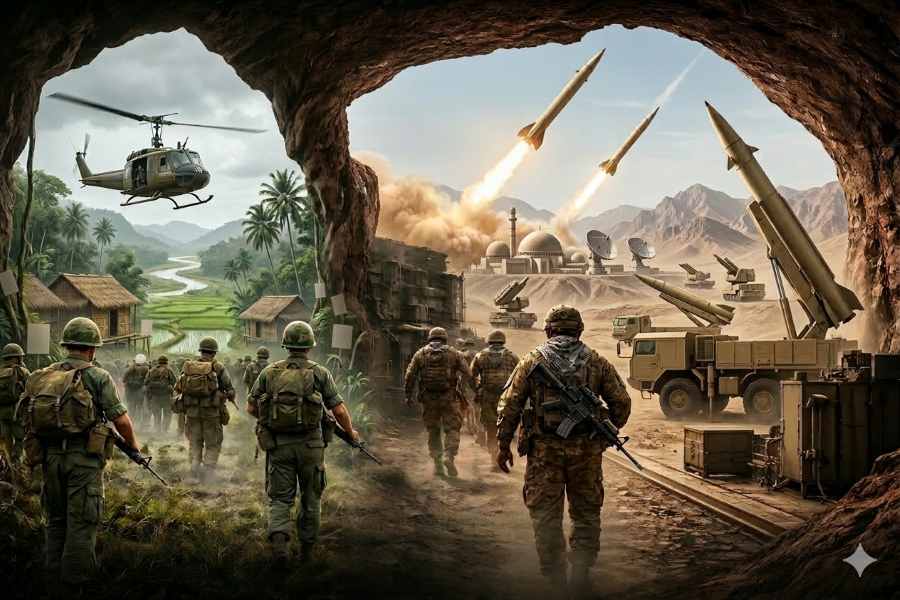
Though all wars are unique, there are some striking similarities between the present US–Iran war and the US–Vietnam war, as mentioned below:
Failure of a quick victory
The US–Israeli attack on Iran was expected to bring a quick victory by killing Ayatollah Khamenei and bringing about a regime change by installing a pro-US government. However, this has clearly failed.
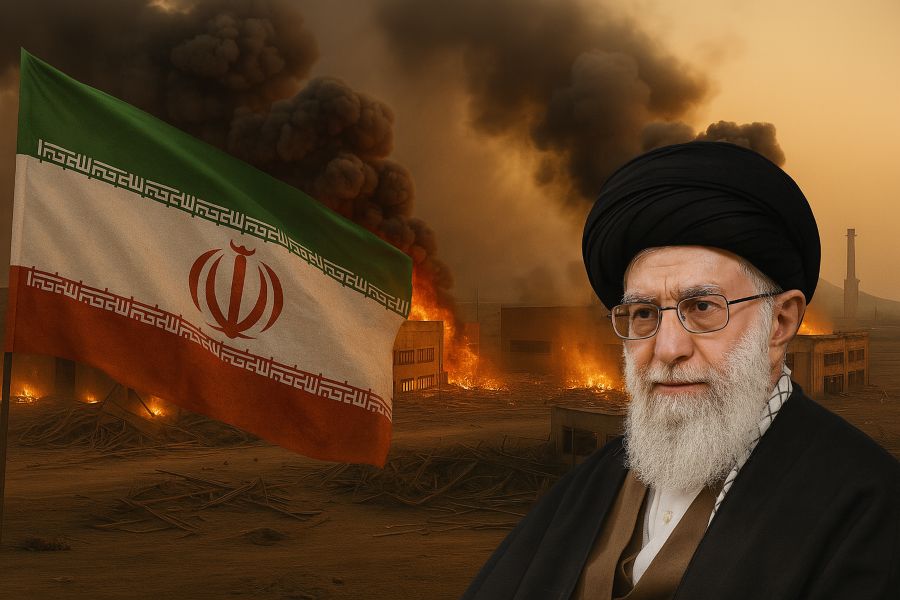 The war has now become a war of attrition, a stalemate similar to the US–Vietnam war, and is likely to be long drawn despite President Trump’s claims to the contrary.
In such a situation, Iran may gain the advantage simply by not surrendering, much like the Vietnamese did, since the Americans cannot easily afford a prolonged war.
At the same time, Iran has been striking back with missiles and drone attacks on Israel and US assets in the Middle East, demonstrating that it retains the capacity to retaliate and sustain the conflict.
External support from major powers
Just as the Vietnamese were aided by China and Russia during the Vietnam war, Iran also appears to be receiving support from these countries in the present conflict. China and Russia are powerful industrialized nations, and their assistance means that Iran is not isolated and can receive support in various ways.
In addition, Iran has regional allies such as Hezbollah and the Houthis, which may soon join the war. Iraq has about 60–65% Shias, and many among them are seething in anger against the attack on Iran, which is predominantly a Shia country.
Strong national unity during wartime
During the Vietnam war, almost the entire Vietnamese population was united in resisting American intervention. A similar situation appears to be emerging in Iran.
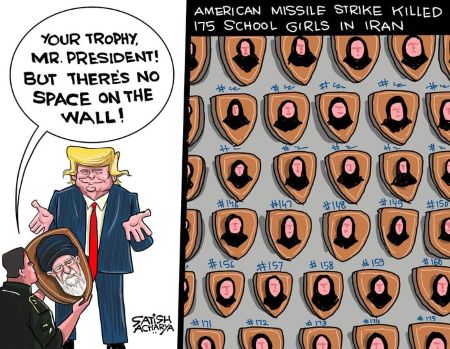
After the killing of Ayatollah Khamenei, many Iranians regard him as a martyr, somewhat like Imam Husain of Karbala in Shia history.
The Americans believed that after the killing of Ayatollah Khamenei, the Iranian people would come out in huge numbers on the streets demanding a regime change.
Instead, what actually happened was that large crowds indeed came out onto the streets, but they condemned America and Israel for this war.
Underground tunnels and infrastructure
During the Vietnam war, the Vietnamese built extensive tunnels and mini-cities deep underground (as in Cu Chi) to escape American air bombing. These underground networks provided shelter not only for soldiers but also for civilians. Some even contained hospitals, schools, and living quarters.
 Similarly, it appears that the Iranians have done the same. Evidence suggests that they are launching their missile and drone strikes not from the surface—where they could easily be targeted by US and Israeli jets—but from deep underground locations where they are difficult to detect and destroy.
It is also reported that the Iranians have built factories for manufacturing missiles and drones deep underground.
This indicates that a section of the Iranian population—including scientists, engineers, construction workers, missile operators, and possibly even civilians and their families—may be working or living in underground facilities, somewhat like the Vietnamese did during the war against America.
Growing opposition within the United States
As happened during the Vietnam war, a large number of Americans—including Democrat Congressmen and Congresswomen, as well as prominent public figures—are speaking out against the war.

Protests have already begun, and these are likely to increase as the war drags on and its horrors become more widely known.
Wars are extremely expensive. A prolonged war could mean inflation, increased taxation, and a surge in oil prices, all of which would affect the American public.
These economic pressures are likely to generate further opposition among ordinary Americans.
Civilian casualties and atrocities
Just as the Americans killed large numbers of civilians, including women and children, in their war against Vietnam (for example, the My Lai massacre), similar reports are emerging in the present war against Iran.
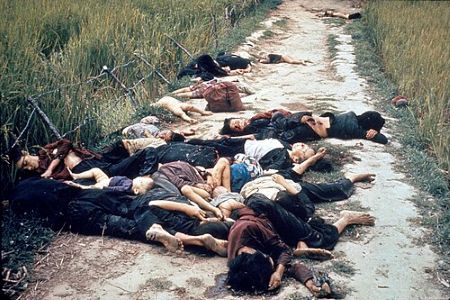
Historical Mirror: The My Lai Massacre remains a stark reminder of the human cost in protracted wars.
During the My Lai massacre in March 1968, US soldiers killed hundreds of unarmed Vietnamese villagers—mostly women, children, and elderly people—making it one of the most notorious atrocities of the Vietnam war.
Likewise, in the present conflict, there are reports of civilian casualties in Iranian cities due to bombing and missile strikes, including strikes that have hit hospitals, schools, and residential areas.
As in Vietnam, such incidents can fuel anger among the local population and strengthen resistance against foreign military intervention.
Thus, the parallels between the present US war on Iran and the Vietnam war are numerous. History shows how the Vietnam war ultimately ended, and these similarities raise important questions about how the present conflict may unfold. 
____________
Also Read:
How $20,000 Drones Are Forcing Million-Dollar Missile Defences

Markandey Katju
Justice Markandey Katju is former Judge, Supreme Court of India and former Chairman, Press Council of India.
Disclaimer : PunjabTodayNews.com and other platforms of the Punjab Today group strive to include views and opinions from across the entire spectrum, but by no means do we agree with everything we publish. Our efforts and editorial choices consistently underscore our authors’ right to the freedom of speech. However, it should be clear to all readers that individual authors are responsible for the information, ideas or opinions in their articles, and very often, these do not reflect the views of PunjabTodayNews.com or other platforms of the group. Punjab Today does not assume any responsibility or liability for the views of authors whose work appears here.
Punjab Today believes in serious, engaging, narrative journalism at a time when mainstream media houses seem to have given up on long-form writing and news television has blurred or altogether erased the lines between news and slapstick entertainment. We at Punjab Today believe that readers such as yourself appreciate cerebral journalism, and would like you to hold us against the best international industry standards. Brickbats are welcome even more than bouquets, though an occasional pat on the back is always encouraging. Good journalism can be a lifeline in these uncertain times worldwide. You can support us in myriad ways. To begin with, by spreading word about us and forwarding this reportage. Stay engaged.
— Team PT