


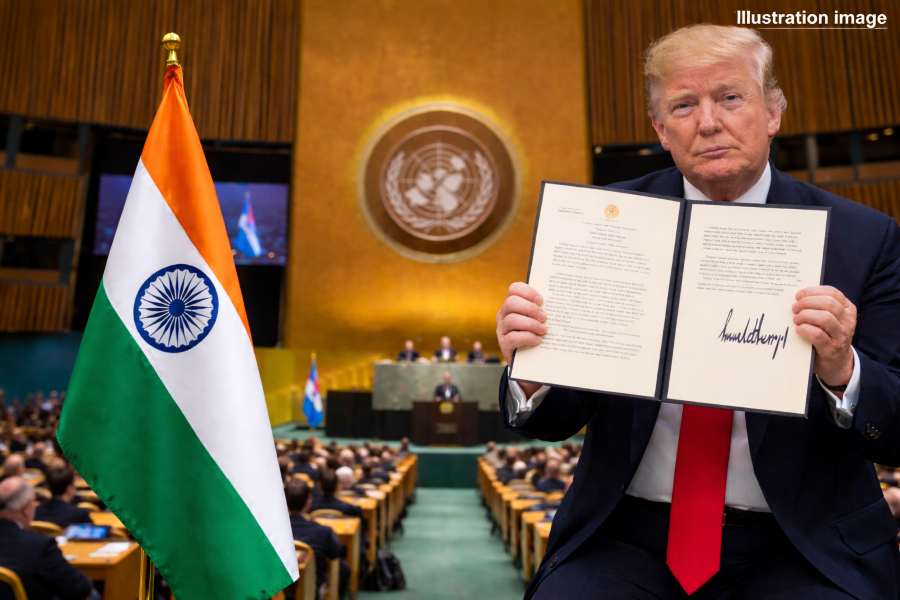
As Washington retreats from climate, human rights and development institutions, India’s diplomatic credibility positions it to shape a more inclusive global order.
US PRESIDENT Donald Trump recently signed an executive order directing the United States to withdraw from 66 international organisations, calling them “anti-American” and contrary to US interests.
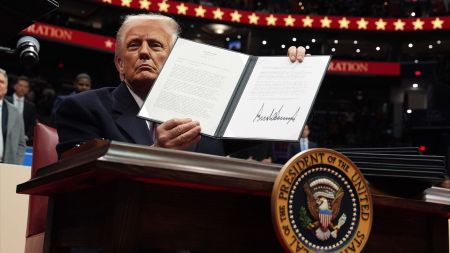
Donald Trump signs executive order on international policy
Trump directed all executive departments and agencies to take immediate steps to withdraw from 66 UN-led organisations “as soon as possible,” ceasing both participation and funding to the extent permitted by law.
The withdrawal affects organisations spanning climate action, human rights, gender equality, and international development.
Among the most significant withdrawals is the US exit from the UN Framework Convention on Climate Change (UNFCCC), the underlying treaty for the Paris Climate Agreement.
The list also includes the International Solar Alliance, a collaborative initiative between India and France on climate change, with over 100 signatory countries.
Secretary of State Marco Rubio characterised the targeted institutions as “redundant in their scope, mismanaged, unnecessary, wasteful, poorly run, captured by the interests of actors advancing their own agendas contrary to our own, or a threat to our nation’s sovereignty, freedoms, and general prosperity.”
Rubio stated that what began as a framework for international cooperation has “morphed into a sprawling architecture of global governance, often dominated by progressive ideology.”
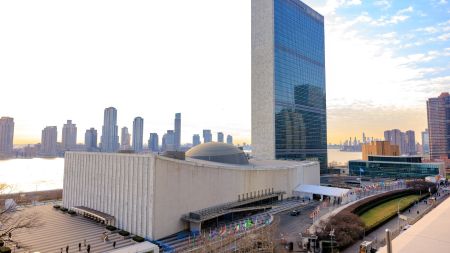
United Nations headquarters in New York
US Ambassador to the UN Mike Waltz emphasised that the US will no longer fund organisations that “do not serve, or in many cases work counter to, American interests.”
Rubio further emphasised that “the days of billions of dollars in taxpayer money flowing to foreign interests at the expense of our people are over,” signalling the administration’s broader shift away from multilateral engagement.
The State Department confirmed that additional reviews of international organisational participation remain ongoing.
The UN said on Thursday (January 8) that its work will continue despite the US announcement made on Wednesday (January 7).
“Our work will continue,” UN spokesperson Stéphane Dujarric said at the UN headquarters in New York. “The Secretary-General respects the sovereignty of each of the members of this organisation, and he also strongly believes that the challenges we face today can only be solved through international cooperation. That’s been his view since day one, and it continues to be his view.”
Opportunity for India
At a practical level, this offers a golden opportunity for India and other like-minded countries to draw up a programme for reorganising and revitalising the UN, in line with their aspirations.
These countries have long been vocal critics of the P-5. In this mammoth campaign, India’s role in establishing the Non-Aligned Movement (NAM) to promote self-determination for developing nations can become its badge of honour.
Additionally, what goes in favour of India is its diplomatic and multilateral engagement over the past ten years. During this period, India has acted as a mediator between the North and the South on climate change, trade, and security issues. It could very deservedly project itself as a ‘Vishwa Bandhu’ (friend of the world), advocating inclusivity in global governance.
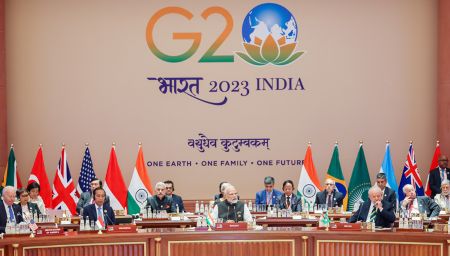
G20 Summit 2023 leaders meeting in New Delhi
During its G20 Presidency in 2023, India ensured the African Union’s inclusion as a permanent member— a landmark move for Southern representation. India’s active participation in BRICS, the Quad, and the Voice of Global South Summit reflects its commitment to global governance reform and strategic balance.
India has persistently demanded reforms in global institutions like the UNSC, World Bank, and IMF to reflect the voices of developing countries.
India is also leading sustainable development efforts among developing nations. Mission LiFE, the International Solar Alliance, and the National Green Hydrogen Mission reflect India’s leadership in sustainability. As the third-largest producer of wind and solar energy, India is supporting climate justice for vulnerable nations.
India is a global leader in Digital Public Infrastructure (DPI). Platforms like Aadhaar and UPI have inspired over 12 countries to adopt similar systems, enhancing digital equity and inclusion across the Global South.
India has emerged as a first responder in global crises through humanitarian missions such as Operation Dost (Turkey), Operation Karuna (Myanmar), and Operation Kaveri (Sudan), reinforcing its role as a key development partner. India has extended Lines of Credit (LOCs) worth USD 12 billion to 42 African countries as part of its development finance initiatives.
Global South in the Current World Order
The UN Security Council (UNSC) still reflects post-World War II power structures. India, the world’s most populous country and a major economy, still lacks a permanent seat in the UNSC despite decades of advocacy.
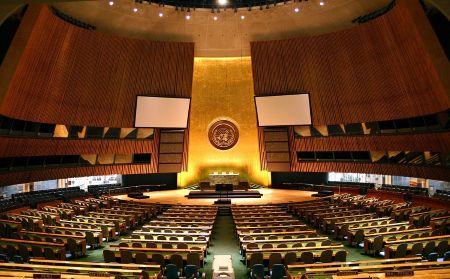
Un General Assembly Hall
The undermining of the UN system by major powers, including the US, has left smaller countries without a neutral forum to address regional conflicts or economic grievances.
Global South countries are increasingly pressured to pick sides in US–China or US–Russia rivalries. This undermines strategic autonomy and distracts from development goals.
The Global South is also wary of the West’s selective human rights advocacy—acting on Ukraine while ignoring Gaza—and of frequent external interference in internal matters.
Promoting South-South Cooperation
South-South Cooperation (SSC) can help address gaps in finance, technology, and capacity-building that North-South aid has often failed to cover. Initiatives like the India-UN Development Partnership Fund have extended demand-driven assistance to Pacific Island nations and Africa, offering flexible and context-specific support.
Also Read: Trump’s Plan to Reshape Global Power Dynamics
Unlike one-size-fits-all models, SSC aligns well with the 2030 Agenda by providing sustainable, locally tailored solutions to achieve the Sustainable Development Goals (SDGs).

South-South Cooperation
SSC can also work in conjunction with developed nations through triangular cooperation, where Northern partners support Southern-led initiatives. This creates synergy rather than competition, as seen in FAO-led agricultural projects supported by China and implemented in Latin America.
SSC has played a key role during global emergencies. India’s vaccine diplomacy during COVID-19 is an example of solidarity-driven responses that complemented—or filled the void left by—North-South efforts. By enabling flexible, peer-driven solutions, SSC helps countries confront overlapping crises such as climate change, pandemics, and debt distress.
The Challenges
Growing South-South trade and investments, such as China-Africa and India-ASEAN engagements, will shift global economic gravity and contest the centrality of the North.
Many Global South countries have raised concerns about the West’s use of aid as a tool of influence, often with conditions related to governance or policy reform. SSC presents a counter-model that is non-conditional and sovereignty-respecting.
Global South cooperation
Nearly 60% of high-tech exports from developing countries are traded within the Global South, indicating growing intra-South economic interdependence beyond traditional North-South flows.
The rise of Southern powers like India through initiatives such as the International Solar Alliance challenges the notion that development leadership and solutions must come from the Global North.
Thus, a stronger and more united Global South—with credible leadership and equitable participation in global governance—can fill the void created by the US withdrawal from UN organisations.
Also Read: American Onslaught on Latin America
Guided by the Indian ethos of Vasudhaiva Kutumbakam (“One Earth, One Family, One Future”), India can amplify Southern priorities with inclusivity and balance. Its leadership can help transform the Global South from a passive voice into an active player shaping a new world order. 
__________
Also Read:
India at Crossroads: Diplomacy, Economy and Domestic Turbulence
Artificial Intelligence Is an Asset to Media, Not a Substitute
Asad Mirza
The author is a New Delhi-based senior commentator on national and international affairs, defence and strategic issues, and environmental concerns. He is also an interfaith practitioner and a media consultant. Previously, he was associated with the BBC Urdu Service and the Khaleej Times in Dubai.
Disclaimer : PunjabTodayNews.com and other platforms of the Punjab Today group strive to include views and opinions from across the entire spectrum, but by no means do we agree with everything we publish. Our efforts and editorial choices consistently underscore our authors’ right to the freedom of speech. However, it should be clear to all readers that individual authors are responsible for the information, ideas or opinions in their articles, and very often, these do not reflect the views of PunjabTodayNews.com or other platforms of the group. Punjab Today does not assume any responsibility or liability for the views of authors whose work appears here.
Punjab Today believes in serious, engaging, narrative journalism at a time when mainstream media houses seem to have given up on long-form writing and news television has blurred or altogether erased the lines between news and slapstick entertainment. We at Punjab Today believe that readers such as yourself appreciate cerebral journalism, and would like you to hold us against the best international industry standards. Brickbats are welcome even more than bouquets, though an occasional pat on the back is always encouraging. Good journalism can be a lifeline in these uncertain times worldwide. You can support us in myriad ways. To begin with, by spreading word about us and forwarding this reportage. Stay engaged.
— Team PT