



How prolonged denial of bail turns pre-trial detention into punishment
Bail should be the rule if an expeditious trial proves impossible in a case, former Chief Justice of India D.Y. Chandrachud said on Sunday while commenting on the repeated denial of bail to activist Umar Khalid, who has remained in jail since September 2020 without trial.
The former CJI was speaking at a session titled “Ideas of Justice” at the 19th Jaipur Literature Festival.

Former CJI D Y Chandrachud
“Bail, before the Constitution, should be a matter of right. Our law is founded on one presumption—that every accused is innocent until proven guilty at trial. Pre-trial detention cannot be a form of punishment. If a person is jailed for five to seven years before trial and is then finally acquitted, how would you compensate for that lost time?” he said.
He added, “Bail is denied when the accused may repeat the offence, tamper with evidence, or might flee. If these three exceptions are not made out, bail has to be the rule. The problem we are facing today is that many of our laws, particularly those relating to national security, have turned the law on its head by substituting the presumption of innocence with almost a presumption of guilt.”
Bail Jurisprudence vs Ground Reality
Justice Chandrachud, even while heading the highest court, had made similar remarks on several occasions. He had also instructed judges of the high courts and the subordinate judiciary that hearings and decisions on bail applications should not be delayed for extended periods.
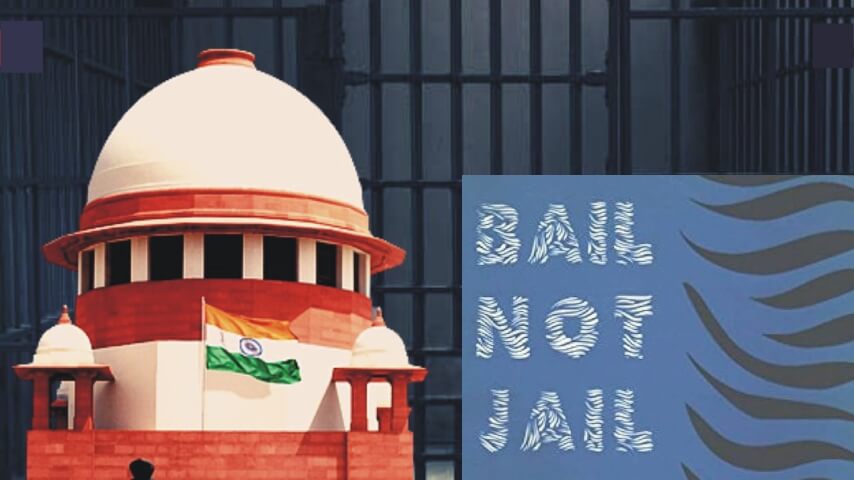
Bail, not jail, remains the legal norm
Bail is the rule and jail is an exception—this principle applies to those arrested under the UAPA and PMLA as well, he had said.
To be sure, such remarks have been made by several of his predecessors and successors. However, the situation remains pathetic and has, in fact, worsened.
Numerous social activists, intellectuals, students, and environmentalists have been detained for years on unproven charges of sedition, in several cases without trial for long periods.
Justice Delayed, Justice Denied
The former Chief Justice of India had specifically mentioned Umar Khalid, a student leader from JNU, who was arrested by the Delhi Police’s Special Cell under the UAPA in 2020.

Selective urgency in bail cases.
His bail application has been rejected several times despite the fact that no charges have been framed against him for the last five years.
His case includes 460 witnesses and a 30,000-page charge sheet, along with four supplementary charge sheets, virtually ensuring his detention for several more years. Why Justice Chandrachud did not take up his case suo motu during his tenure remains a moot question.
Then there is the case of 90 per cent physically disabled Delhi University professor G.N. Saibaba, who was accused of alleged links with Maoists and was detained for ten years.
Also Read: When Justice Itself Awaits Justice
He should have been granted unconditional release under the Rights of Persons with Disabilities Act, 2016, but not only was he denied bail on medical grounds, he also did not receive adequate medical care.
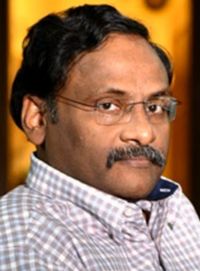
Prof. G. N. Saibaba
Last year, the Supreme Court acquitted him and ordered the unconditional release of five social activists, including Prof. Saibaba, on all charges of alleged links with Maoists, under which he had been sentenced to life imprisonment.
However, the inhumane treatment meted out to him aggravated his health problems, and he passed away a few months after his release.
Another case is that of 84-year-old priest and social activist Stan Swamy, whose plea for bail was rejected despite his advanced age and severe illness. He died in judicial custody.
Selective Urgency and Eroding Public Trust
The latest case of arbitrary detention and judicial failure to intervene is that of Ladakh-based environmentalist Sonam Wangchuk, an internationally acclaimed environmentalist with impeccable credentials as a patriotic citizen.

Sonam Wangchuk
The government has turned a deaf ear to demands for his release and has steadfastly declined to provide any evidence justifying his detention under draconian laws.
There have also been numerous instances where dissenting voices have been suppressed, while those associated with the ruling dispensation have walked away lightly. These include cases of persons convicted of gang rape who were reportedly garlanded by BJP supporters upon their release.
Also Read: New Laws: Faster Justice, Fading Freedom
While the judiciary has gone out of its way to conduct late-night hearings in some high-profile cases, it has allowed cases such as those relating to the 1984 Sikh massacre to languish without final adjudication.
 Incidents such as the discovery of an unaccounted stash of currency notes at the residence of a high court judge—while the public remains in the dark about the source of the cash—are eroding public faith in the institution.
The judiciary remains the last resort of hope for justice, but it is fast losing credibility. This is both unfortunate and dangerous for our democracy.
It is high time the judiciary itself undertakes serious introspection to restore public confidence. 
__________
Also Read:
JAN 21 – when US Supreme Court opened billion-dollar road for the ilk of Trump in politics
Patiala Gutka Ban: Emergency Powers, Altered Orders, Unanswered Questions

Vipin Pubby
The author, a freelance journalist, is a former Resident Editor of Indian Express, Chandigarh, and reported on the political developments in Jammu and Kashmir, North-Eastern India, Gujarat, Himachal Pradesh, Haryana and Punjab in his long, illustrious career.
Disclaimer : PunjabTodayNews.com and other platforms of the Punjab Today group strive to include views and opinions from across the entire spectrum, but by no means do we agree with everything we publish. Our efforts and editorial choices consistently underscore our authors’ right to the freedom of speech. However, it should be clear to all readers that individual authors are responsible for the information, ideas or opinions in their articles, and very often, these do not reflect the views of PunjabTodayNews.com or other platforms of the group. Punjab Today does not assume any responsibility or liability for the views of authors whose work appears here.
Punjab Today believes in serious, engaging, narrative journalism at a time when mainstream media houses seem to have given up on long-form writing and news television has blurred or altogether erased the lines between news and slapstick entertainment. We at Punjab Today believe that readers such as yourself appreciate cerebral journalism, and would like you to hold us against the best international industry standards. Brickbats are welcome even more than bouquets, though an occasional pat on the back is always encouraging. Good journalism can be a lifeline in these uncertain times worldwide. You can support us in myriad ways. To begin with, by spreading word about us and forwarding this reportage. Stay engaged.
— Team PT