


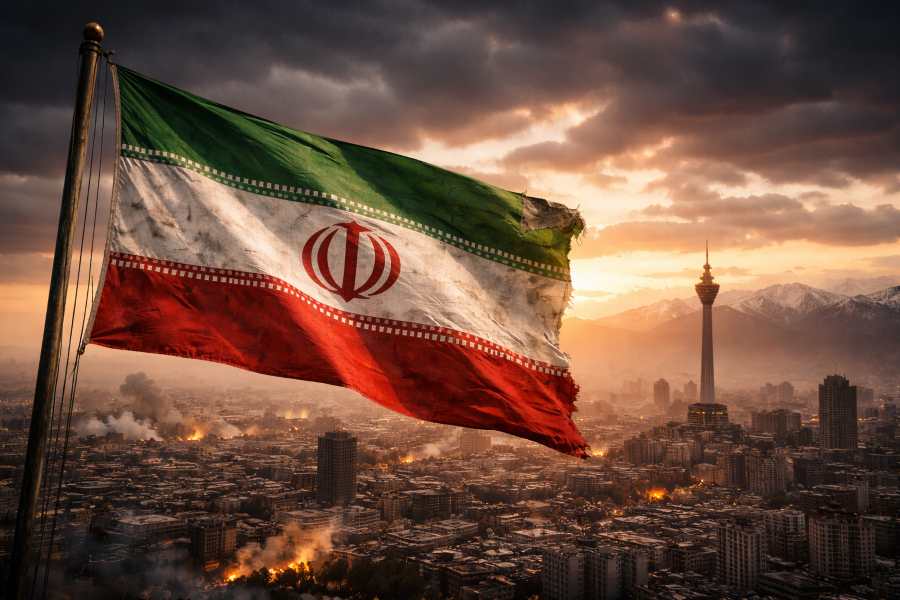
As the conflict between the United States, Israel and Iran intensifies, many analysts predict a decisive military outcome. Justice Markandey Katju (Retd.) argues that history, culture, geography and political realities suggest otherwise — that Iran’s resistance may ultimately prevail.
IN A HISTORIC speech on 4 June 1940 in the House of Commons, in one of Britain’s darkest hours with German invasion looming, the British Prime Minister Winston Churchill said:
“We shall go on to the end. We shall fight on the seas and oceans, we shall fight on the beaches, we shall fight on the landing grounds, we shall fight in the fields and in the streets, we shall fight in the hills; we shall never surrender.”
The same heroic spirit is being displayed by the brave Iranians.
Despite the killing of Ayatollah Ali Khamenei, the US-Israeli aim of effecting a quick regime change and installing a pro-US puppet regime in Iran is bound to fail. As explained by the eminent Professor Seyed M. Marandi of Tehran University, such expectations underestimate both the resilience of the Iranian state and the determination of its people.
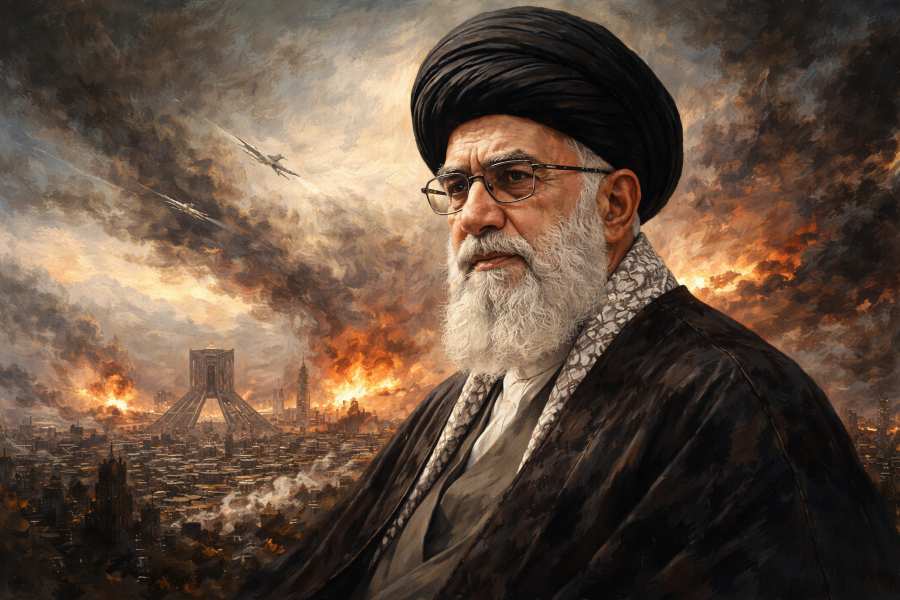
Indeed, the killing of Khamenei has, far from weakening Iran, united the Iranian people as never before. According to reports, he refused to leave his office despite the danger, saying that ordinary Iranians had nowhere to go, and remained there until he was killed. Many of his supporters portray him today as a modern-day Imam Husain of Karbala.
But Imam Husain had only seventy-two followers who were martyred with him. Iran today has a population of over ninety million, many of whom stand united behind their country in the face of external attack.
How does one fight a people who prefer death to surrender?
Lessons From Vietnam
History shows that military superiority does not necessarily guarantee victory.
Vietnam was a much smaller and poorer country than the United States, yet it defeated the latter in a prolonged war. It achieved victory by not being defeated — by simply refusing to surrender.
The American journalist Walter Cronkite famously declared in his broadcast of 27 February 1968 that the Vietnam War had reached a stalemate. That moment played a decisive role in shaping American public opinion and eventually led to President Lyndon Johnson deciding not to seek re-election, followed by the withdrawal of American troops from Vietnam.
A similar pattern may well unfold in the present conflict.
What was expected to be a quick US-Israeli victory followed by regime change in Tehran may instead become a long stalemate. And in wars of this nature, a stalemate effectively means victory for the weaker side.
A People Not Afraid of Death
Iran is predominantly a Shia country, and Shias regard martyrdom as the supreme achievement of a human being.
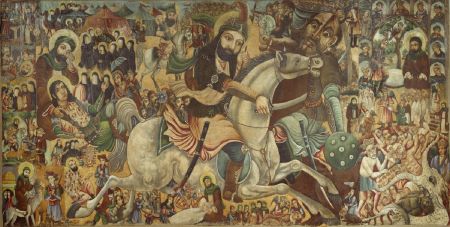
Battle Of Karbala
The defining event of Shia history is the Battle of Karbala, where Imam Husain, the grandson of the Prophet Muhammad, was martyred along with seventy-two of his followers. This event is commemorated every year during the observance of Ashura.
The message of Karbala is simple and powerful: it is better to die than to surrender to injustice.
This spirit of resistance forms a deep part of the Shia psyche.
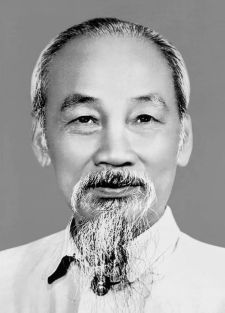
Ho Chi Minh
The Vietnamese leader Ho Chi Minh once told the Americans:
“You may kill ten of our men, while we kill only one of yours — yet we will win.”
How does one defeat a people who are not afraid of death?
The only way to defeat Iran would be to destroy the entire population of more than ninety million people. Is that possible?
Iran Is Not Venezuela
Some policymakers in Washington seem to believe that Iran can be subdued through a quick military strike followed by regime change.
Iran is a large country with difficult terrain, mountains and deserts, making a ground invasion extremely difficult. Moreover, it is not isolated. Like Vietnam in the past, it has powerful partners and considerable strategic depth.
Despite enormous pressure, Iran has been fighting back.
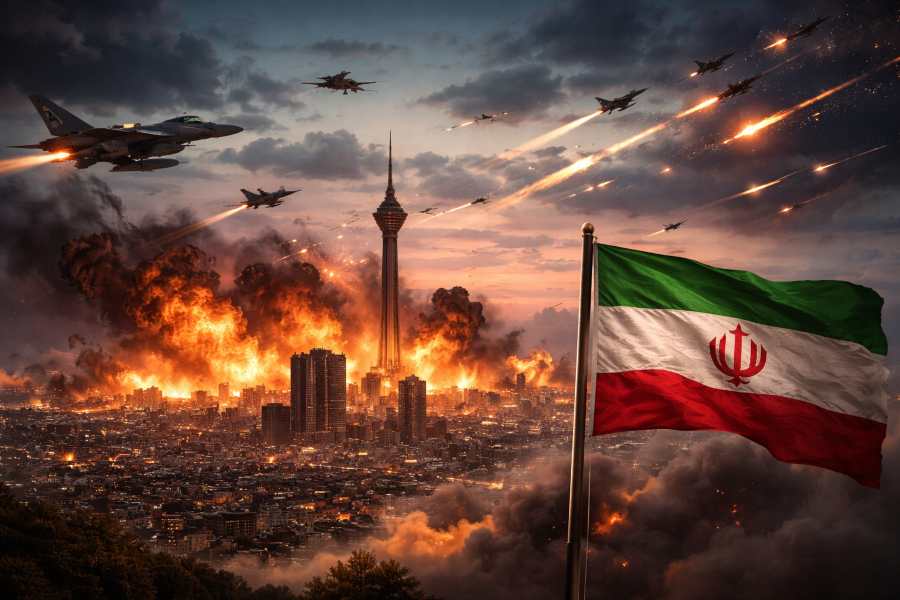 Iranian missiles and drones have struck targets not only in Israel but also in several locations associated with American influence in the region. Reports indicate that Iranian missiles have struck the US Embassy in Riyadh, the office of Israeli Prime Minister Benjamin Netanyahu and even the Saudi Aramco refinery.
Some reports also claim that US F-15 fighter jets have been shot down and that American military personnel have been killed in the conflict.
Meanwhile, Iran’s ally Hezbollah has also launched attacks against Israel.
These developments indicate that the war is unlikely to remain a quick, one-sided campaign.
The Strait of Hormuz Factor
Another crucial factor is the Strait of Hormuz, through which roughly one-fifth of the world’s oil supply passes.
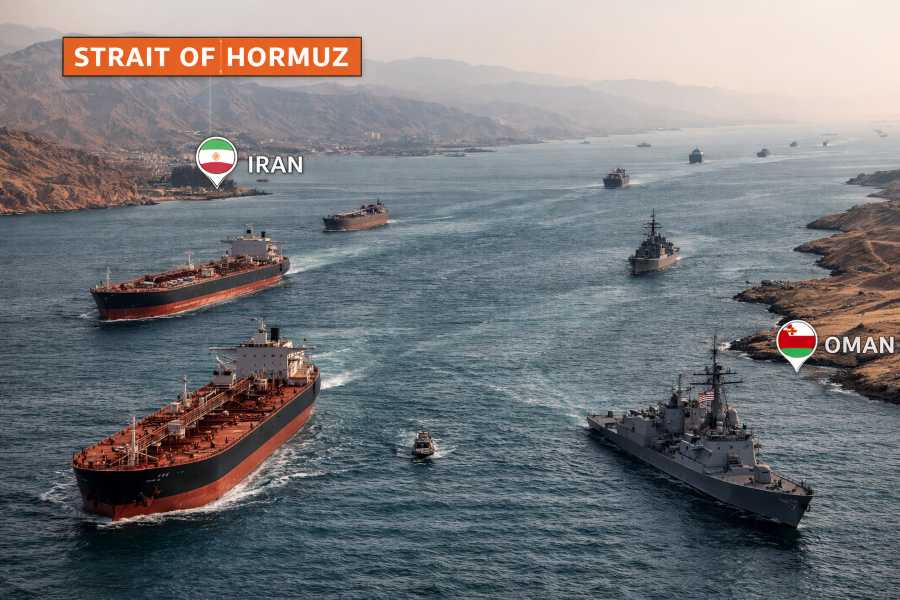 Any disruption there could send global oil prices soaring and place enormous pressure on the world economy, particularly on the United States and its allies.
Modern wars are not fought only on battlefields; they are also fought through economic pressure.
Opposition in the US, Muslim World and Global Opinion
America also faces internal political constraints.
Prolonged wars are extremely expensive and often unpopular with the public.
Already some prominent American voices have spoken out against the conflict, including Professor Jeffrey Sachs of Columbia University and retired US Army Colonel Douglas Macgregor.
A Reuters/Ipsos poll conducted in early March found that only about one in four Americans supported the US strikes on Iran, while a larger share opposed them.
 If the war drags on, domestic opposition within the United States is likely to grow, just as it did during the Vietnam War.
The conflict is also resonating across the Muslim world.
While several governments in the region may be aligned with the United States, public opinion in many Muslim countries strongly sympathizes with Iran, partly because Iran has consistently supported the Palestinian cause.
Governments may be pro-American, but many of their people are not.
As the war continues, popular sentiment across the Middle East may increasingly express solidarity with Iran.
Justice and History
Finally, Iran believes it is fighting for a just cause — the right of every nation, however small or poor, to independence and self-determination.
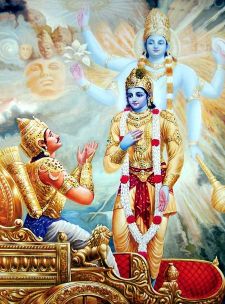 In the Indian epic Mahabharata, the Kauravas possessed a far larger and stronger army than the Pandavas. Yet the Pandavas ultimately prevailed because Lord Krishna stood with them.
Krishna symbolizes justice and righteousness.
In the Bhagavad Gita (Chapter 18, Shloka 78) it is said:
यत्र योगेश्वरः कृष्णो
यत्र पार्थो धनुर्धरः
तत्र श्रीर्विजयो भूतिर्ध्रुवा नीतिर्मतिर्मम
“Yatra Yogeshwarah Krishna
Yatra Partho Dhanur-dharah
Tatra Shrir Vijayo Bhutir
Dhruva Neetir Matir Mama”
Wherever there is Lord Krishna and Arjuna, there are victory, prosperity and righteousness.
History repeatedly shows that military strength alone does not determine the outcome of wars. The morale of a people, their unity, their willingness to endure suffering, and their belief in the justice of their cause often prove far more decisive.
And it is this indomitable spirit that today defines Iran.
Sar par hawa-e-zulm chale sau jatan ke saath
Apni kulahkaj hai usi baankepan ke saath
— Majrooh Sultanpuri
It seems President Trump and his cronies have bitten more than they can chew. 
___________
Also Read:

Markandey Katju
Justice Markandey Katju is former Judge, Supreme Court of India and former Chairman, Press Council of India.
Disclaimer : PunjabTodayNews.com and other platforms of the Punjab Today group strive to include views and opinions from across the entire spectrum, but by no means do we agree with everything we publish. Our efforts and editorial choices consistently underscore our authors’ right to the freedom of speech. However, it should be clear to all readers that individual authors are responsible for the information, ideas or opinions in their articles, and very often, these do not reflect the views of PunjabTodayNews.com or other platforms of the group. Punjab Today does not assume any responsibility or liability for the views of authors whose work appears here.
Punjab Today believes in serious, engaging, narrative journalism at a time when mainstream media houses seem to have given up on long-form writing and news television has blurred or altogether erased the lines between news and slapstick entertainment. We at Punjab Today believe that readers such as yourself appreciate cerebral journalism, and would like you to hold us against the best international industry standards. Brickbats are welcome even more than bouquets, though an occasional pat on the back is always encouraging. Good journalism can be a lifeline in these uncertain times worldwide. You can support us in myriad ways. To begin with, by spreading word about us and forwarding this reportage. Stay engaged.
— Team PT