


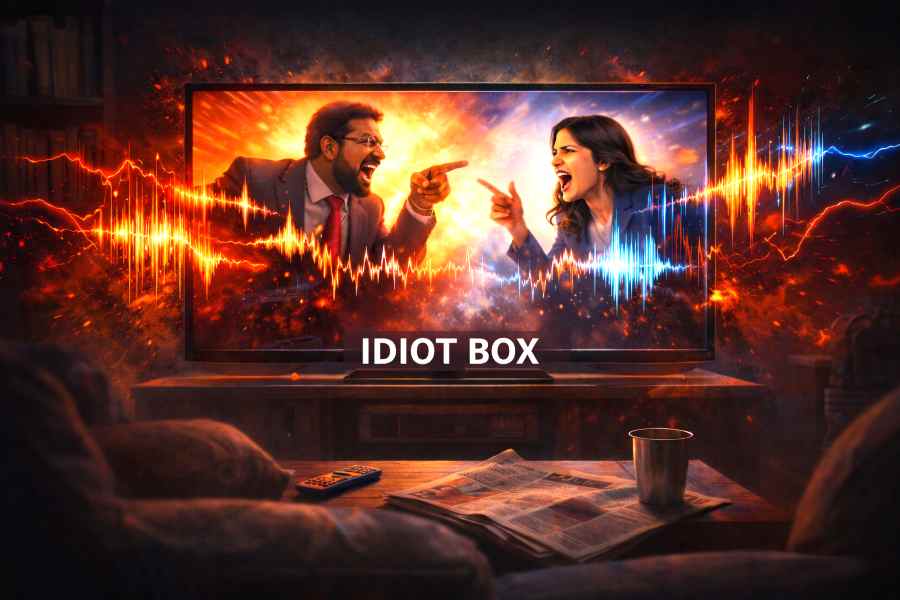
The TRP-driven slide into shrill debates and communal bias has weakened public trust in broadcast journalism
IT IS NO secret that television viewership, particularly in the news category, is sharply declining in the country. As per estimates, the subscriber base of direct-to-home operators fell from 7.2 crore in 2019 to 6.10 crore in 2024 and is expected to dip further to 5.1 crore by the end of this year.
Although the share of television news channels has always been relatively low—with entertainment, sports, and music channels topping the list—it is unfortunate that whenever there is a discussion on the state of media in the country, the debate inevitably boils down to the functioning of television news channels alone.
Recall Value and the ‘Godi Media’ Label
This may partly be because visual media has the highest recall value. No wonder the entire media ecosystem is now often dubbed “godi media,” even though print media has, by and large, maintained professional standards. Put differently, it has not degenerated into the kind of slanging matches or the incessant shouting and screaming routinely witnessed on television news channels.
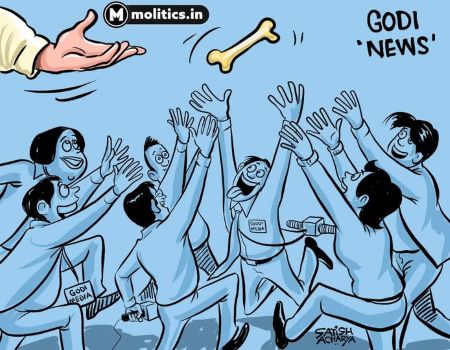
Yes, a section of media observers may disagree with this view, pointing instead to the carrot-and-stick policies adopted by governments of all hues to ensure compliance.
However, my argument is limited to the atrocious, high-decibel “debates” that dominate TV studios, where panelists—often egged on by biased anchors—humiliate and degrade one another. It is rare to come across any sane, meaningful debate on these channels.
TRPs, Credibility Loss and Communal Poison
Clearly, all this is done with an eye on TRPs, which directly impact advertising revenue. Owners and managers of these channels appear to believe that viewers want “drama” and action on their screens, making serious journalism a casualty. Unsurprisingly, most of these channels have lost credibility.

From the infamous claim by a leading anchor that a tracking chip had been inserted into all ₹2,000 currency notes after demonetisation to recent gaffes about Indian forces reaching Lahore and Karachi, such channels have repeatedly made themselves a laughing stock.
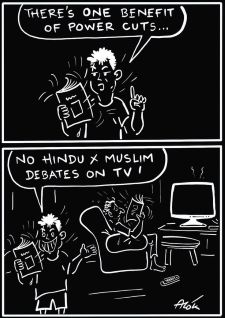
More serious, however, is the blatant spread of communal hatred by some television news channels. The bias in their presentation is often obvious and deeply troubling. Indeed, they have done immense disservice to the nation.
This reality is reflected in the records of the News Broadcasting and Digital Standards Authority (NBDSA), earlier known as the News Broadcasters Association.
The NBDSA represents private television news, current affairs, and digital broadcasters and is funded entirely by its members.
While one of its stated objectives is to protect members “from persons or entities who carry on unfair and/or unethical practices or who discredit television news broadcasters and digital news media,” it also adjudicates complaints against its own member channels.
A study has found that nearly 60 per cent of the orders passed by the NBDSA over the past three years were against programmes that violated its code on communal harmony.
Also Read:
TIMES NOW, the TIME is NOW: Group of Journos in Godi Media House Gasps For Real Stuff
Given the communal poison some channels continue to inject into society, this is hardly surprising. There appears to be a competitive race among them to become shriller and more aggressive purveyors of hate.
Digital Media: A Ray of Hope for Journalism
This desperate race for higher TRPs—and consequently higher revenues—has caused enormous, and perhaps irreversible, damage to society and the nation. However, more than newsrooms and anchors, the primary responsibility lies with the owners, who have abdicated their moral and professional duties.

In an era marked by declining media credibility—largely due to television news—the opening up of the digital space is a positive development.
Several digital platforms are already doing commendable work, offering informed debates, serious news analysis, and well-argued opinion pieces. They hold genuine promise for better journalism in the future.
Also Read: The ‘Independent’ Indian Media
That said, these platforms, along with citizens at large, must fiercely guard their freedom—especially at a time when the government appears to be contemplating ways to restrict it. 
_________
Also Read:
AJIT – AAP – Barjinder Singh Hamdard – Bhagwant Mann – All Is Well

Vipin Pubby
The author, a freelance journalist, is a former Resident Editor of Indian Express, Chandigarh, and reported on the political developments in Jammu and Kashmir, North-Eastern India, Gujarat, Himachal Pradesh, Haryana and Punjab in his long, illustrious career.
Disclaimer : PunjabTodayNews.com and other platforms of the Punjab Today group strive to include views and opinions from across the entire spectrum, but by no means do we agree with everything we publish. Our efforts and editorial choices consistently underscore our authors’ right to the freedom of speech. However, it should be clear to all readers that individual authors are responsible for the information, ideas or opinions in their articles, and very often, these do not reflect the views of PunjabTodayNews.com or other platforms of the group. Punjab Today does not assume any responsibility or liability for the views of authors whose work appears here.
Punjab Today believes in serious, engaging, narrative journalism at a time when mainstream media houses seem to have given up on long-form writing and news television has blurred or altogether erased the lines between news and slapstick entertainment. We at Punjab Today believe that readers such as yourself appreciate cerebral journalism, and would like you to hold us against the best international industry standards. Brickbats are welcome even more than bouquets, though an occasional pat on the back is always encouraging. Good journalism can be a lifeline in these uncertain times worldwide. You can support us in myriad ways. To begin with, by spreading word about us and forwarding this reportage. Stay engaged.
— Team PT